
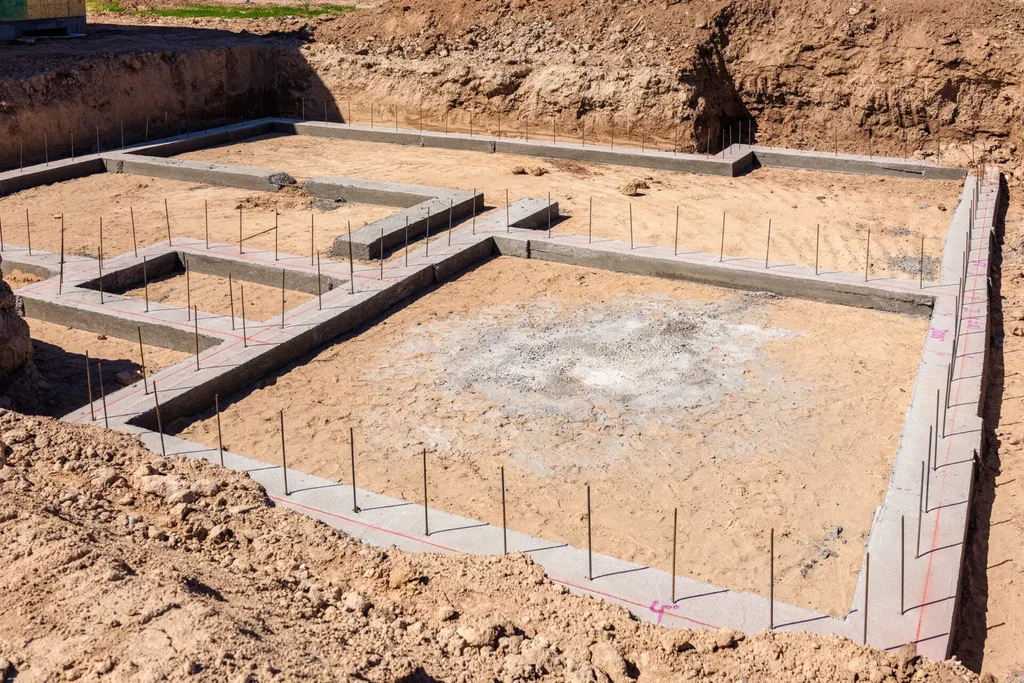
Here is the short answer. If the building permit for your Edmonton home was applied for on or after February 1, 2014, your foundation is covered by a mandatory warranty — and the window that covers it is the longest one on the list: ten years. That coverage is not something your builder offered you as a kindness. It is required by provincial law, and the home had to be enrolled with a warranty provider before it was built.
And here is the part that catches people out. If you added on to an older Edmonton house — a new back half, a second storey, an attached garage — that addition is almost certainly not covered, no matter how new the concrete is. The rule that decides it is a threshold most homeowners have never heard of, and we will get to it below.
If you are reading this because something is moving, the useful thing to know first is how much time you have left on the clock. Then you can decide whether this is a warranty conversation or a foundation repair conversation.
The four warranty windows, and which one your foundation sits in
Alberta’s mandatory coverage is not one warranty. It is four, running at the same time, from the same start date.
The clock starts at whichever of these happens first: you occupy the home, the permitting authority gives permission to occupy, or title transfers to you. For most Edmonton buyers that is possession day.
| Window | Length | What it covers |
|---|---|---|
| Labour and materials | 1 year | “Any defects in materials and labour related to how the home was constructed” — flooring, cabinets, trim |
| Delivery and distribution systems | 2 years | “Defects related to the electrical, plumbing, heating, ventilation and air conditioning delivery systems” |
| Building envelope | 5 years | “The shell of the home, including the roof and walls.” Builders must be offered the option to buy two more years |
| Major structural components | 10 years | “The frame, including the roof’s structural integrity, and the foundation“ |
Your foundation is in the last row. That is deliberate — the Province put the two things you cannot practically replace, the frame and the foundation, in the longest window.
There are also minimum coverage amounts set in law, running into the mid-hundreds of thousands for a single-family home and a lower figure for a condominium or multi-family unit, with a much larger pool for common property in a multi-family building. Those minimums change, so check the current numbers on the Province’s new home warranty page rather than trusting a figure in any article, including this one.
How to find out whether your Edmonton home is actually enrolled
Start with the date, because the date decides everything else.
A note on that date, honestly: the Province’s own pages describe the trigger two ways. One says the rule applies where the building permit was applied for on or after February 1, 2014. Another says homes with building permits issued before that date are not covered. For almost every home those two give the same answer, but if your permit sits right on the edge of that winter, do not guess — confirm it with the Residential Protection Program before you rely on either reading.
For a home built after that date, the Province keeps a property registry you can search to see whether the home was enrolled with a warranty provider. Builders are required to enrol a home before building it, and enrolled homes are registered. If your home predates February 2014, the Province’s guidance is that the information will be in your home purchase documents instead.
If you bought the house from someone else, the warranty did not stay with them. It runs with the home for the remainder of its windows. That is worth knowing if you are the second owner of a 2017 build in a neighbourhood like Laurel, Walker, Glenridding Heights or Keswick — the foundation window may still have years left on it.
Three situations where there is no warranty, even on brand-new concrete
This is where most of the surprises live.
1. Your renovation or addition did not meet the threshold. The Province is specific: home renovations “do not require home warranty coverage or that the builder is licensed under the New Home Buyer Protection Act,” with one exception — where over 75% of the completed home is brand-new construction.
Read that carefully, because it is a ratio, not a size. A large addition on a modest bungalow can still leave the finished house less than three-quarters new, and then no warranty is triggered. A gut job that keeps little more than the original footprint can cross the line and be treated as a new home.
So if you are planning an addition in Edmonton, understand that two protections are decoupled. You still need a permit — the City requires one for extending the main floor, adding a bay window, a sunroom, a covered deck, an attached pergola, an attached garage, or adding a second or third storey, and the City notes that additional trades permits may be needed for heating and ventilation, plumbing, gas and electrical work. But a permit is a code and zoning check. It is not warranty coverage, and it is not a guarantee about your footings.
2. The house was owner-built. Alberta allows an owner builder authorization, and an approved owner builder “can choose to build with or without home warranty.” If you are buying a home that was owner-built, that choice was made years ago by someone else, and it may not have gone your way. Ask.
3. The building type is outside the Act. The legislation excludes dormitories, care facilities, work camps and hotels, and it does not apply to homes built on or relocated to federal lands. There are also narrower rules for conversions of buildings more than ten years old and for multi-family rentals held long term.
Why Edmonton foundations are the ones worth watching the clock on
Direct answer: because the ground here moves, and a foundation that moves is the single most expensive thing a warranty can cover.
Much of the Edmonton region sits on clay-rich soil. Clay swells when it takes on water and shrinks as it dries out, so the support under a footing is not a constant — it changes with the season and with how water is managed around the house. Add our freeze-thaw cycles: water in the soil freezes and expands, pushing upward on anything bearing on it, then thaws and leaves that support uneven. That is frost heave, and it is why drainage away from the house matters as much as the concrete itself.
What this article will not do is give you a required footing depth. The depth your lot needs is a site-specific call, and the right place to get it is the City of Edmonton or the engineer on your project — not a blog. Anyone who quotes you a universal number for Edmonton is guessing.
Signs worth photographing and dating while you are still inside your window:
- Doors and windows that bind in one season and not another
- New diagonal cracking at the corners of basement window openings
- A gap opening between the top of the foundation wall and the framing above it
- Water appearing at the base of a wall that used to stay dry
- Exterior grade that has settled back toward the house
Date-stamped photos are the cheapest warranty tool you own. A claim about movement is far easier to make when you can show when it started.
If you are outside coverage, what the work actually involves
Direct answer: the cost is driven less by the concrete than by access, depth and what has to be held up while the work happens.
Foundation work on an existing Edmonton home usually means some combination of excavating along the wall, dealing with whatever drainage was or was not installed, repairing or replacing the wall itself, and restoring the grade afterward. On tight infill lots in the mature neighbourhoods — and on any lot where the only way in is a narrow side yard or a back alley — access is frequently the biggest single line on the quote. Machines that cannot reach the wall mean hand work, and hand work is time.
Two things to line up before you ask anyone for a number:
- What is actually wrong. A crack being monitored is a different job than a wall that has rotated. An assessment first means you are pricing one scope instead of three.
- What happens to the grade and drainage after. Backfill and final grade are part of the job, not an afterthought, and in Edmonton your lot grading has to end up where the City expects it.
For current square-foot pricing on the flatwork side of a project, our Edmonton concrete cost calculator is the place to start. For the structural side, our concrete foundations and footing and foundation pages explain how the work is staged, and if the issue is a wall that needs rebuilding, cribbing is the term you will see on the quote.
Outside Edmonton
The warranty itself is provincial, so the four windows and the 75% renovation threshold work the same way in Sherwood Park, St. Albert, Spruce Grove, Leduc, Beaumont, Fort Saskatchewan and Stony Plain as they do inside the city.
What changes outside Edmonton is the paperwork around the work: permits, inspections and lot grading are handled by your own municipality, not by the City of Edmonton, and the forms and timelines differ. Confirm the process with your municipal office before you book anything.
Where this page stops
This page covers what the mandatory warranty windows are, which one your foundation sits in, how to check enrolment, and the three common cases where there is no coverage. It does not cover how to file a claim, how to dispute a denied claim, or the specific obligations of a warranty provider — the Province runs a separate claims process for that. It also does not interpret your particular situation. If real money is at stake, get the assessment before you get opinions.
FAQ
Is my foundation covered under Alberta’s new home warranty? If your home’s building permit came on or after February 1, 2014, yes — the foundation falls under the major structural window, which runs ten years from when coverage started.
Does my home addition get new home warranty coverage? Usually no. Renovations do not require warranty coverage or a licensed builder under the Act unless over 75% of the completed home is brand-new construction. You still need a City of Edmonton permit either way.
When does the warranty clock start? At whichever comes first: you occupy the home, the permitting authority grants permission to occupy, or title transfers to you.
I bought the house second-hand. Did the warranty transfer? The coverage runs with the home for the balance of its windows, so a later owner can still be inside the ten-year structural window.
How do I find out who my warranty provider is? Search the Province’s property registry to see whether the home was enrolled. For homes built before February 2014, the Province’s guidance is to check your home purchase documents.
What footing depth does my Edmonton lot require? That is a site-specific answer. Confirm it with the City of Edmonton or the engineer on your project rather than relying on a general figure.
My foundation is moving and I am past ten years. What now? Start with an assessment so you are pricing one defined scope. Then look at access, drainage and final grade, which usually move the number more than the concrete does.
Sources
Government of Alberta, New home warranty and New home warranty overview; City of Edmonton, Home Addition Permit.
