
Planning a new driveway in the Haysboro neighbourhood or a foundation for an addition in Silver Springs? Understanding the real cost of concrete in 2026 is your first step to a solid budget.
Prices have shifted with inflation and supply, but knowing the local price per square foot keeps your project on track. This guide breaks down exactly what Edmonton homeowners and contractors can expect to pay, from a basic slab to complex finishes.
We’ll provide realistic 2026 price ranges and explain what drives them, so you can plan with confidence. For a project-specific quote from a local authority you can trust, reach out to EdmontonConcrete.
Average Concrete Costs in Edmonton
Before diving into specifics, it helps to have a ballpark figure. The average cost for a standard concrete pour in Edmonton ranges from $10 to $25 per square foot.
That’s a wide range because so many factors are at play—from the type of finish to the condition of your site in neighbourhoods like Glenora or Capilano. This section will give you the foundational numbers to start your planning.
Cost Per Square Foot for Concrete Slabs
The most common way to price concrete work is by the square foot. For a basic, 4-inch thick slab with a simple broom finish, you’re typically looking at $10 to $15 per square foot.
This price usually includes site preparation, forming, the pour, and the finishing work. It’s the benchmark for projects like shed bases, simple patios, or garage floors in newer communities like Windermere.
Cost Per Cubic Yard or Meter
Contractors and suppliers also quote by volume, especially for larger projects. In Edmonton, you can expect to pay between $180 and $250 per cubic yard for the ready-mix concrete itself, delivered.
Remember, this is just for the material. Labour, forming, reinforcement, and finishing are all separate costs that get added on top, which is why the per-square-foot quote is often more useful for total budgeting.
Price Ranges by Project Size
Larger projects often benefit from a lower price per unit due to economies of scale. A 500 sq ft driveway might come in at the higher end of the $12-$18 per sq ft range, while a 2,000 sq ft commercial pad might be quoted closer to $9-$14 per sq ft.
Smaller projects under 100 square feet often see a premium, as they require the same mobilization and setup for a contractor but with less material. Getting multiple quotes is key to finding fair pricing for your specific scope.
Bottom line: Always get quotes based on your complete project scope, not just material volume.
Factors Affecting Concrete Prices

Why does one quote differ so much from another? The final price isn’t just about the grey stuff. Several key elements combine to determine your final cost, and understanding them puts you in the driver’s seat.
A project on a tricky, sloped lot near the North Saskatchewan River valley will involve different costs than a simple, flat backyard in Mill Woods.
Material and Concrete Strength Variations
Not all concrete is created equal. The mix design—specifically the compressive strength measured in MPa (Megapascals)—directly impacts price. A standard 25 MPa mix for a driveway is common, but a 32 MPa mix for a heavy-duty shop floor costs more.
Additives also play a role. Air-entraining agents for freeze-thaw resistance (crucial for Edmonton winters) or accelerators for faster winter curing will add to your material bill. Specifying the right mix for the job is a balance of performance and cost.
Labor and Contractor Costs
Skilled labour is one of the largest components of your quote. Experienced concrete finishers command wages that reflect their expertise in handling Edmonton’s tight pour schedules and achieving a smooth, durable finish.
A crew’s reputation, insurance, and warranty offerings are built into their rate. Choosing the cheapest labour often leads to costly corrections down the road, like spalling on a Whyte Avenue sidewalk after one winter.
Site Preparation and Accessibility
This is the wild card. Is the site clear, level, and easy for a concrete truck to access? If the answer is no, prices rise. Excavation, tree root removal, bringing in granular fill, and building a stable sub-base all add significant cost.
Tight access in mature neighbourhoods like Highlands, where trucks can’t easily maneuver, may require pump trucks or additional manual labour, adding hundreds or even thousands to the project total.
Project Size and Complexity
A simple rectangular slab is the most cost-effective. The moment you add curves, multiple levels, intricate forming, or integration with existing structures, complexity—and cost—increases.
Stamped patterns, exposed aggregate finishes, or coloured concrete require more time, specialized tools, and skilled artisans. That stunning patio in Laurier Heights comes with a price tag that reflects the artistry involved.
What separates a great pour from a failed one? Often, it’s the investment in proper site prep and skilled labour.
Concrete Pricing by Project Type
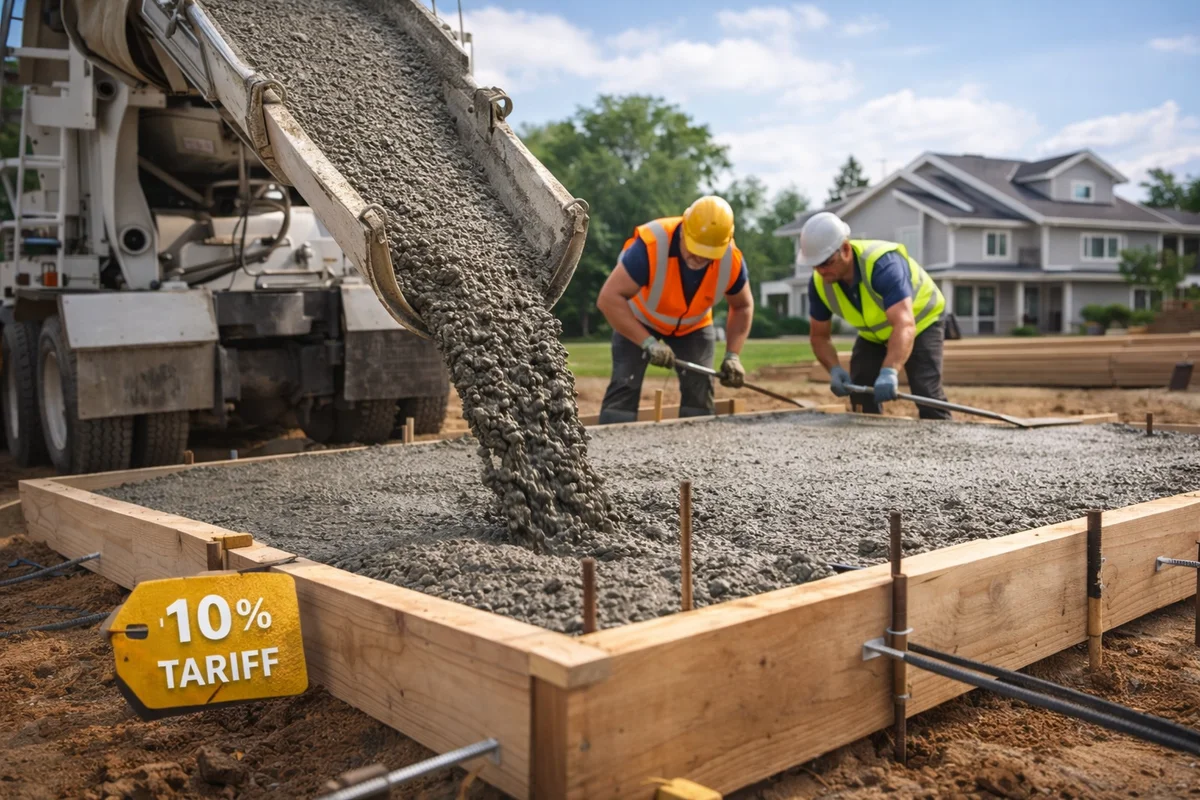
The best way to gauge your potential cost is to look at typical price ranges for common projects. The following table provides 2026 estimates for Edmonton, but remember these are starting points.
Your specific location, site conditions, and design choices will move you within or even beyond these ranges.
| Project Type | Price Range (CAD) | Notes |
|---|---|---|
| Basic broom-finish driveway | $10–$15 / sq ft | Standard 4-inch slab, includes base prep |
| Stamped concrete patio | $18–$28 / sq ft | Complexity of pattern affects price |
| Exposed aggregate walkway | $16–$24 / sq ft | Includes washing and sealing |
| Foundation (per linear foot) | $200–$350 / ln ft | Highly dependent on depth and engineering |
| Garage floor (standard finish) | $8–$12 / sq ft | 5–6 inch slab, often requires thicker base |
Standard Concrete Slabs
As the workhorse of concrete projects, standard slabs for garages, sheds, or basements range from $8 to $14 per square foot. The thickness is a major driver; moving from a 4-inch to a 6-inch slab increases material costs by about 50%.
Reinforcement like wire mesh or rebar is often recommended, especially in areas with unstable soil, adding $1 to $3 per square foot to the total.
Sidewalks and Footings
City sidewalk replacement often has specific bylaws regarding slope and finish. A standard residential sidewalk replacement typically costs $15 to $22 per square foot, including demolition and disposal of the old material.
Footings for decks or additions are usually priced by linear foot or as a package, ranging from $200 to $350 per linear foot depending on depth and diameter.
Driveways
Edmonton driveways need to withstand heavy vehicles and our harsh climate. A standard broom-finished driveway (4-5 inches thick) generally falls in the $12-$18 per square foot range.
Upgrades like a thicker slab (6 inches), a stronger mix, or a lightly stamped border will push the price toward the $20+ per square foot mark. Proper base preparation is non-negotiable here to prevent sinking and cracking.
Indoor Concrete Finishes
Polishing or applying an epoxy coating to an existing basement or garage slab transforms the space. Basic concrete polishing starts around $3-$7 per square foot, while decorative epoxy floors range from $5 to $12 per square foot.
These prices are highly dependent on the condition of the existing slab. Significant repairs or leveling will need to be addressed first, adding to the project cost.
Fence Posts and Heavy Equipment
Small projects like setting fence posts are often priced per hole or as a project minimum. Expect to pay $100 to $250 per post, including digging, concrete, and setting.
Pads for heavy equipment like air conditioners or hot tubs require specific engineering for load-bearing. These small but critical pads can cost $500 to $1,500 depending on size and specifications.
The project type sets your baseline, but the details of your site and design finalize the price.
Delivery and Additional Fees

The quoted price per yard or square foot rarely tells the whole story. Several ancillary fees can appear on your final invoice, and it’s best to ask about them upfront.
A reputable contractor like EdmontonConcrete will be transparent about these potential charges from the start.
Delivery Charges
Most ready-mix suppliers include a base delivery fee within a certain radius of their plant. For locations beyond that, a distance surcharge is applied per kilometer.
There’s also often a fee for “wait time” if the truck is on-site longer than the allotted period (usually 45-60 minutes), as the driver and truck are tied up. Good site preparation and crew readiness prevent this cost.
Fuel Surcharges and Environmental Fees
Volatile fuel prices mean many suppliers implement a fuel surcharge, which is a percentage added to the total material cost. This fee can fluctuate monthly.
Some quotes may also include small environmental or regulatory fees related to material sourcing and production. These are typically nominal but are worth clarifying.
Other Surcharges
Weekend or after-hours pours often incur a premium labour rate. If your project requires a concrete pump because a truck can’t reach the site, that’s another major cost—often $300 to $600 for the pump and operator.
Always request a detailed quote that breaks out material, labour, and any potential additional fees. This transparency helps you compare quotes accurately and avoid surprises.
Sound familiar? A surprise fee on invoice day is frustrating. Clarify all potential surcharges before you sign a contract.
Cost-Saving Tips for Concrete Projects
Want to get the best value without compromising quality? Strategic planning can make a significant difference in your total investment. It’s not about cutting corners, but about making smart choices.
Scheduling your pour for the off-peak season (late fall, early spring) can sometimes yield better rates, though you must balance this with weather risks.
| Cost Factor | Impact on Price | How to Minimise |
|---|---|---|
| Site Accessibility | High | Clear a wide path for trucks. Rent a bin to remove debris well in advance. |
| Project Timing | Medium | Book during a contractor’s slower period (avoid late spring rush). |
| Finish Complexity | High | Opt for a simple broom finish. Add decorative borders only in high-visibility areas. |
| Slab Thickness | High | Follow—but don’t arbitrarily exceed—engineered specifications for your project type. |
| DIY Components | Low/Medium | Handle your own demolition, site clearing, or post-cure sealing (if skilled). |
Be wary of quotes that seem drastically lower than others. This often signals inexperience, the use of subpar materials, or a contractor who plans to cut crucial corners like sub-base preparation.
That “deal” on a driveway in Terwillegar Towne could cost you double in repairs after the first freeze-thaw cycle. Investing in quality workmanship from the start is the ultimate cost-saving measure.
Concrete Calculators and Quotes
Online concrete calculators are a great starting point to estimate material volume. You input length, width, and depth, and they tell you how many cubic yards you’ll need.
Remember, these tools only calculate material. They don’t account for labour, forming, reinforcement, finishes, or the unique challenges of your property in areas like Bonnie Doon with its mature landscapes.
Frequently Asked Questions
Let’s address some of the most common questions Edmonton homeowners have about concrete pricing.
What is the current price per yard of concrete in Edmonton?
As of 2026, the ready-mix concrete material itself typically costs between $180 and $250 per cubic yard, delivered. This price fluctuates with demand and the cost of cement and aggregates. Your final project cost per square foot will be significantly higher once labour, site work, and finishing are added.
For an accurate total project cost, you need a site-specific quote that considers all these factors, not just the material price.
How much should I budget for a 20×20 concrete patio?
For a 400 square foot patio with a standard broom finish, budget between $5,000 and $8,000. This assumes a 4-inch slab with proper base preparation and includes forming, pouring, and finishing.
If you want a stamped or coloured finish for your patio in Riverbend, your budget should start closer to $7,500 and can go up to $11,000 or more for intricate designs and multiple colours.
Does concrete cost more if poured in the winter?
Yes, winter concrete pours in Edmonton often cost 10-20% more. This surcharge covers cold-weather additives (accelerators, non-chloride), insulated blankets to protect the curing concrete, and potential heated enclosures.
The added complexity and risk of pouring in sub-zero temperatures require extra materials and labour, which is reflected in the price. Most contractors will advise waiting for more stable temperatures unless the project is urgent.
How long does it take to get a concrete quote in Edmonton?
A reputable contractor will usually provide a detailed quote within 2 to 5 business days. This timeline allows them to review your project specifics, possibly visit the site (especially for projects in areas with variable soil like the North Saskatchewan valley slopes), and prepare an accurate estimate.
Be prepared to share details like project dimensions, desired finish, site photos, and accessibility. The more information you provide, the faster and more accurate the quote will be.
Ready to move from estimates to an exact price? The only way to know your true cost is with a professional, on-site assessment.
Navigating 2026 concrete prices in Edmonton starts with the ranges in this guide but ends with a personalized quote. The final number for your driveway in Aspen Gardens or your commercial pad in the industrial sector hinges on your unique site, design, and timeline.
Use the cost-saving tips and factor tables to ask informed questions when comparing proposals. Remember, a clear, detailed contract is your best protection against unexpected costs and ensures everyone is on the same page.
For an accurate, transparent quote on your next concrete project, contact the local experts at EdmontonConcrete. We bring years of Edmonton-specific experience to every pour, helping you invest wisely in a foundation, slab, or finish that will last for decades.
