
Garden Suite Foundation Cost in Edmonton: What the Concrete Costs, and What the Bylaw Decides First
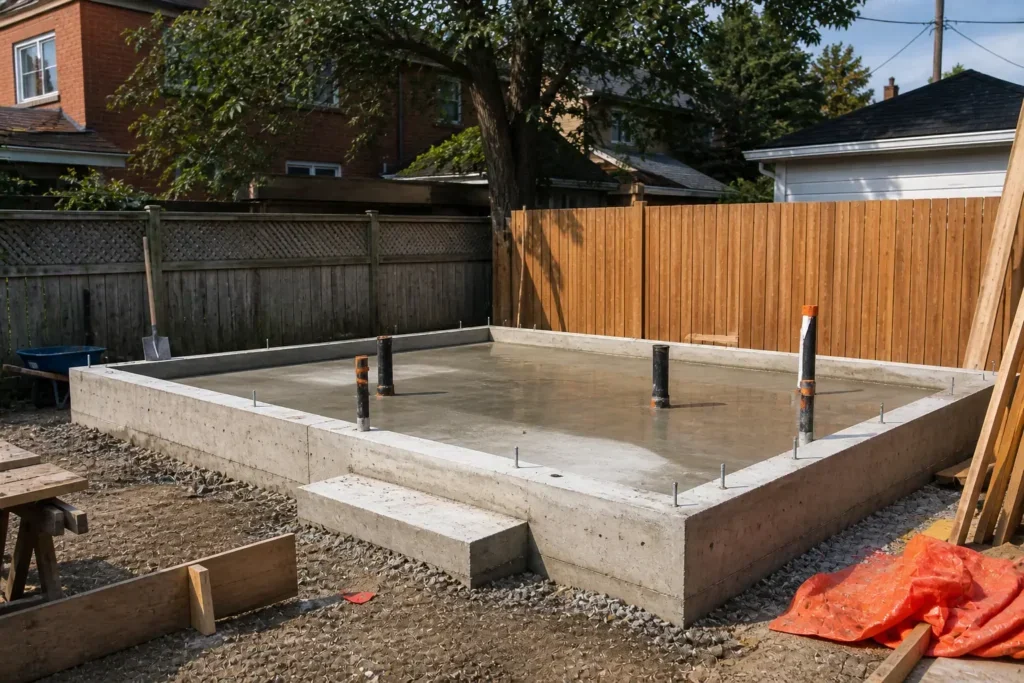
What the slab and footings for an Edmonton garden suite cost per square foot, how the zoning bylaw sets your footprint, permits, and winter timing.
RV Pad Cost in Edmonton: What You’ll Pay, Where the City Lets You Put It, and What Size You Need
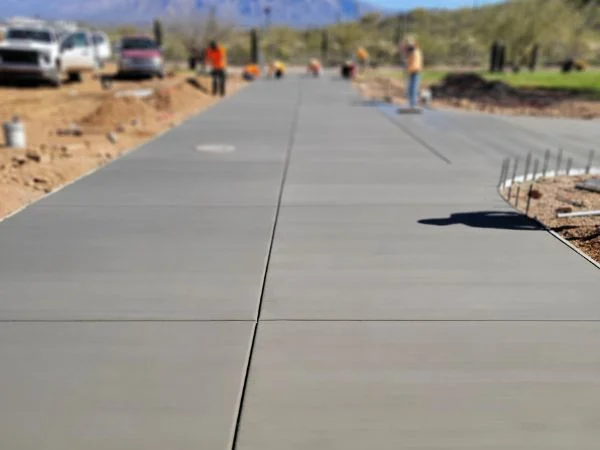
What a concrete RV pad costs in Edmonton, what size you need for your trailer, and where the City actually lets you park it once winter starts.
Backyard Sport Court Cost in Edmonton: What Size You Can Actually Fit, and What the Slab Costs
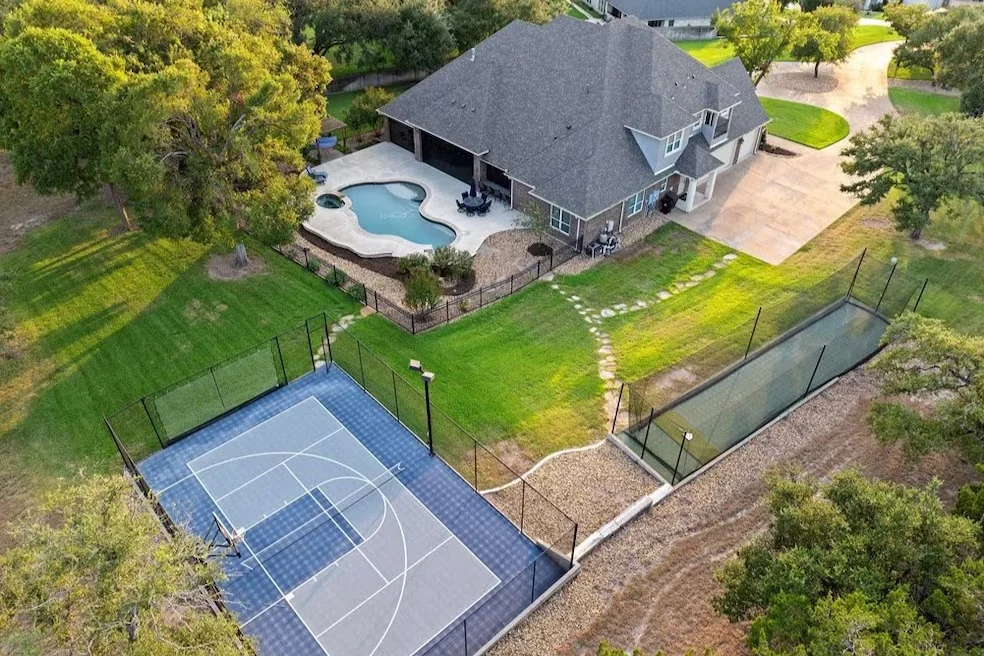
What a backyard sport court costs in Edmonton, how big a court your lot can legally hold, and why the slab underneath decides whether it lasts.
Concrete Cribbing in Edmonton: What It Actually Is, and What to Check Before the Pour
Cribbing is the forming stage of your foundation. What an Edmonton cribbing crew does, where it sits in the build, and what to check before the pour.
Concrete Steps in Edmonton: What They Cost, When You Need a Permit, and Why Yours Are Pulling Away From the House
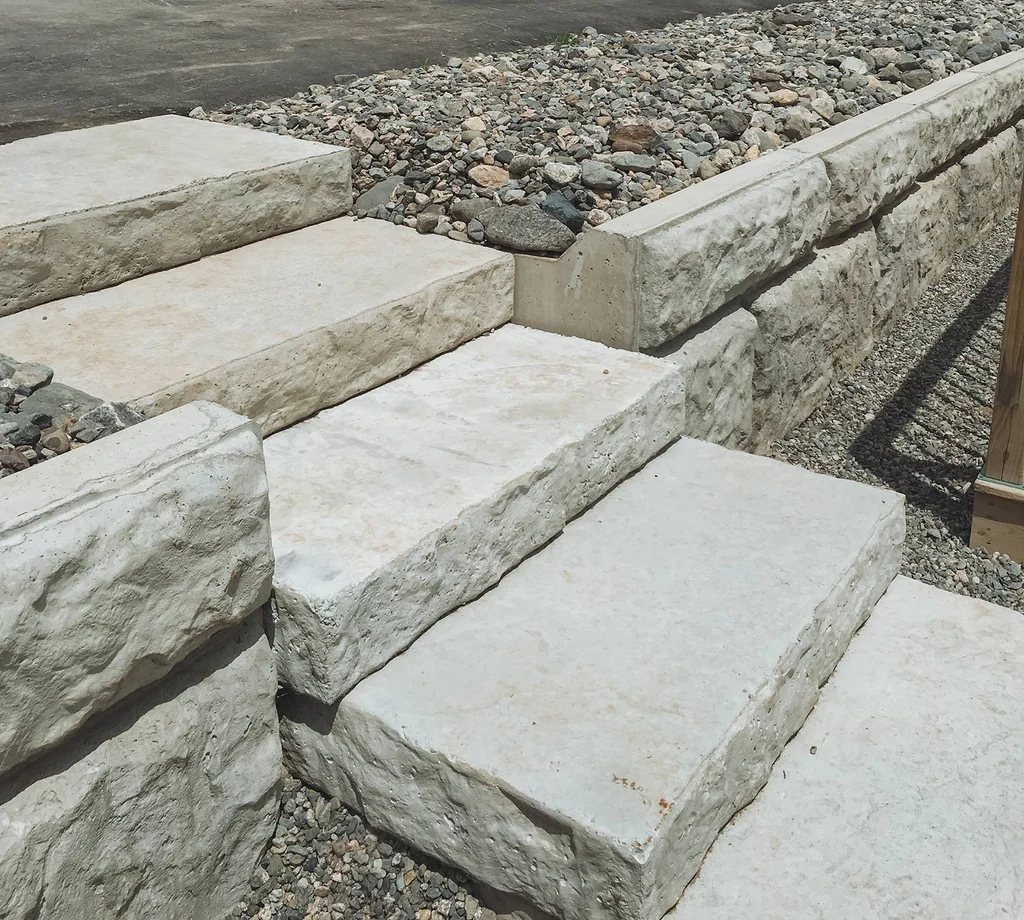
What concrete steps cost in Edmonton, why yours are sinking, when the City needs a permit, and the rise and run your new steps have to hit.
Do You Need a Permit for a Retaining Wall in Edmonton?
Most homeowners ask this question after the quote arrives and before the crew shows up. It is the right question at the wrong time — the answer changes the design, and the design changes the price. Here is the actual threshold, where it comes from, and what to confirm before you commit. The short answer: 1.2 metres In Alberta, a retaining wall more than 1.2 m in height requires a building permit when it is adjacent to public property, adjacent to a building access point, or on private property that the public can get to. That threshold comes from the province, not the city — it is set out in Alberta Municipal Affairs’ building code interpretation for retaining walls, STANDATA 19-BCI-007, which applies across the province including Edmonton and the surrounding municipalities. There is a second trigger that has nothing to do with height. Any retaining wall that is critical to the support of a building foundation requires a permit regardless of how tall it is. A 700 mm wall holding the grade beside your foundation wall is in scope. A 1.5 m wall in the middle of a back yard, away from public access and holding nothing but lawn, may not be. So the honest version of the answer is: height decides most cases, but what the wall is doing decides the rest. How height is actually measured Height is measured from the bottom of the footing or base course to the top of the wall — not from the finished grade on the low side. This is where homeowners get caught. A wall that looks like a metre of exposed block often has 300–400 mm of base course and footing buried below grade, which puts it over the 1.2 m line. Before you assume you are under the threshold, measure it the way the code measures it, including the buried portion. The Edmonton Zoning Bylaw 20001 defines a retaining wall as “a structure constructed to support and resist lateral pressure in order to retain earth, rocks, water or similar materials.” That definition is deliberately broad — a stacked block planter that holds back grade is a retaining wall, whatever the supplier calls it in the catalogue. When the wall becomes a structural component The building code has a geometric test for this. A wall is treated as a structural building component when a line drawn from the outer edge of the footing to the bottom of the exposed face of the wall exceeds 45° from horizontal. Below that angle, the wall may still require an engineer’s evaluation depending on soil and loading. In plain terms: the narrower the footing relative to the wall height, the more the wall depends on structural design rather than mass to stay standing. Design loads: the numbers your engineer works from Two numbers govern how a retaining wall is designed in Alberta. Lateral earth pressure. For drained earth, the wall must be designed to resist a pressure equivalent to that exerted by a fluid with a density of not less than 480 kg/m³. That is the code minimum — the soil behind the wall pushes on it the way a fluid would. Surcharge. Where the retained earth is not drained, the design must account for that same pressure plus the fluid pressure of the surcharge. A surcharge is any additional load behind the wall: a driveway, a parking pad, a structure, a slope that keeps climbing, or vehicle access near the top. This is why a wall with a driveway behind it is a different engineering problem from the same wall holding a flat lawn — and why surcharge frequently pushes a wall into engineered territory well before it reaches 1.2 m. Guards: the 600 mm rule people forget If the top of your retaining wall carries pedestrian traffic — a patio, a walkway, a lawn people cross — and the elevation difference exceeds 600 mm, a guard is required and it has to meet the code’s fall-protection standards. This catches a lot of otherwise-finished projects. A 900 mm wall with a patio on top is a fall hazard by code, and the guard has to be designed and anchored, not added afterward as a decorative railing. Worth knowing alongside this: fence heights in Edmonton residential zones are capped at 1.3 m in front yards and 2.0 m in other yards, per Section 5.100 of Zoning Bylaw 20001. If you are planning a fence on top of a retaining wall, check how the two are measured together before you build the wall. The four questions to answer before you design 1. How tall is the wall, measured from the footing? Include the buried base course. Compare against 1.2 m. 2. Is there a surcharge behind it? Driveway, pad, structure, continuing slope, vehicle access — any of these changes the design. 3. Does it sit on or near a property line? Walls that span two lots, sit on a shared line, or retain a neighbour’s grade involve the neighbouring owner as well as the municipality. This is the most common source of disputes and the most common reason a wall gets rebuilt. 4. Does it change drainage? Redirecting runoff onto a neighbour’s lot, blocking an established drainage path, or altering a lot under an active grading approval will all attract attention — and can hold up a lot grading certificate. Confirm the process and any current fees with the City directly: edmonton.ca — Permits, Development and Construction. The detail that actually decides whether the wall lasts Ask ten homeowners what makes a retaining wall fail and they will say the blocks or the concrete. It is almost always water. A retaining wall in central Alberta has to handle three things at once: The answer to all three is drainage behind the wall, not strength in front of it: A properly drained modest wall outlasts an over-built wall with no drainage, every time. Our article on concrete drainage in Edmonton covers the principles that
Stamped Concrete in Sherwood Park, Spruce Grove and St. Albert
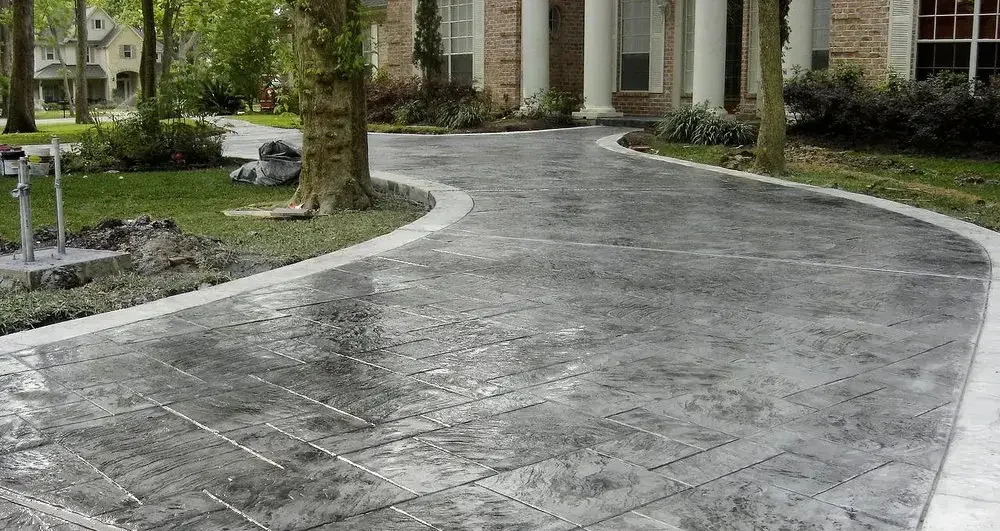
Stamped concrete for Edmonton’s surrounding communities — which patterns survive an Alberta winter, sealing schedules, and what each town requires.
2026 Concrete Prices in Edmonton (Per Sq Ft)
Planning a new driveway in the Haysboro neighbourhood or a foundation for an addition in Silver Springs? Understanding the real cost of concrete in 2026 is your first step to a solid budget. Prices have shifted with inflation and supply, but knowing the local price per square foot keeps your project on track. This guide breaks down exactly what Edmonton homeowners and contractors can expect to pay, from a basic slab to complex finishes. We’ll provide realistic 2026 price ranges and explain what drives them, so you can plan with confidence. For a project-specific quote from a local authority you can trust, reach out to EdmontonConcrete. Average Concrete Costs in Edmonton Before diving into specifics, it helps to have a ballpark figure. The average cost for a standard concrete pour in Edmonton ranges from $10 to $25 per square foot. That’s a wide range because so many factors are at play—from the type of finish to the condition of your site in neighbourhoods like Glenora or Capilano. This section will give you the foundational numbers to start your planning. Cost Per Square Foot for Concrete Slabs The most common way to price concrete work is by the square foot. For a basic, 4-inch thick slab with a simple broom finish, you’re typically looking at $10 to $15 per square foot. This price usually includes site preparation, forming, the pour, and the finishing work. It’s the benchmark for projects like shed bases, simple patios, or garage floors in newer communities like Windermere. Cost Per Cubic Yard or Meter Contractors and suppliers also quote by volume, especially for larger projects. In Edmonton, you can expect to pay between $180 and $250 per cubic yard for the ready-mix concrete itself, delivered. Remember, this is just for the material. Labour, forming, reinforcement, and finishing are all separate costs that get added on top, which is why the per-square-foot quote is often more useful for total budgeting. Price Ranges by Project Size Larger projects often benefit from a lower price per unit due to economies of scale. A 500 sq ft driveway might come in at the higher end of the $12-$18 per sq ft range, while a 2,000 sq ft commercial pad might be quoted closer to $9-$14 per sq ft. Smaller projects under 100 square feet often see a premium, as they require the same mobilization and setup for a contractor but with less material. Getting multiple quotes is key to finding fair pricing for your specific scope. Bottom line: Always get quotes based on your complete project scope, not just material volume. Factors Affecting Concrete Prices Why does one quote differ so much from another? The final price isn’t just about the grey stuff. Several key elements combine to determine your final cost, and understanding them puts you in the driver’s seat. A project on a tricky, sloped lot near the North Saskatchewan River valley will involve different costs than a simple, flat backyard in Mill Woods. Material and Concrete Strength Variations Not all concrete is created equal. The mix design—specifically the compressive strength measured in MPa (Megapascals)—directly impacts price. A standard 25 MPa mix for a driveway is common, but a 32 MPa mix for a heavy-duty shop floor costs more. Additives also play a role. Air-entraining agents for freeze-thaw resistance (crucial for Edmonton winters) or accelerators for faster winter curing will add to your material bill. Specifying the right mix for the job is a balance of performance and cost. Labor and Contractor Costs Skilled labour is one of the largest components of your quote. Experienced concrete finishers command wages that reflect their expertise in handling Edmonton’s tight pour schedules and achieving a smooth, durable finish. A crew’s reputation, insurance, and warranty offerings are built into their rate. Choosing the cheapest labour often leads to costly corrections down the road, like spalling on a Whyte Avenue sidewalk after one winter. Site Preparation and Accessibility This is the wild card. Is the site clear, level, and easy for a concrete truck to access? If the answer is no, prices rise. Excavation, tree root removal, bringing in granular fill, and building a stable sub-base all add significant cost. Tight access in mature neighbourhoods like Highlands, where trucks can’t easily maneuver, may require pump trucks or additional manual labour, adding hundreds or even thousands to the project total. Project Size and Complexity A simple rectangular slab is the most cost-effective. The moment you add curves, multiple levels, intricate forming, or integration with existing structures, complexity—and cost—increases. Stamped patterns, exposed aggregate finishes, or coloured concrete require more time, specialized tools, and skilled artisans. That stunning patio in Laurier Heights comes with a price tag that reflects the artistry involved. What separates a great pour from a failed one? Often, it’s the investment in proper site prep and skilled labour. Concrete Pricing by Project Type The best way to gauge your potential cost is to look at typical price ranges for common projects. The following table provides 2026 estimates for Edmonton, but remember these are starting points. Your specific location, site conditions, and design choices will move you within or even beyond these ranges. Project Type Price Range (CAD) Notes Basic broom-finish driveway $10–$15 / sq ft Standard 4-inch slab, includes base prep Stamped concrete patio $18–$28 / sq ft Complexity of pattern affects price Exposed aggregate walkway $16–$24 / sq ft Includes washing and sealing Foundation (per linear foot) $200–$350 / ln ft Highly dependent on depth and engineering Garage floor (standard finish) $8–$12 / sq ft 5–6 inch slab, often requires thicker base Standard Concrete Slabs As the workhorse of concrete projects, standard slabs for garages, sheds, or basements range from $8 to $14 per square foot. The thickness is a major driver; moving from a 4-inch to a 6-inch slab increases material costs by about 50%. Reinforcement like wire mesh or rebar is often recommended, especially in areas with unstable soil, adding $1 to $3 per square foot to the total.
Best Retaining Wall Materials for Edmonton’s Soil
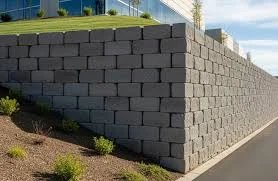
Noticed your yard in Terwillegar Towne starting to slump or planning a new build in the Highlands? Choosing the wrong retaining wall material for Edmonton’s unique clay soil is a costly mistake we see too often. This guide cuts through the noise to show you the best options, ranked for our local climate. Let’s find the right material to secure your property for decades, just like we do at EdmontonConcrete. Why Retaining Walls Are Essential for Edmonton’s Sloped Yards and Clay Soil Edmonton’s terrain isn’t flat, especially in river valley communities like Cloverdale or older areas with natural grade changes. Those beautiful, sloped lots come with a challenge: soil movement. A well-built retaining wall does more than just hold back dirt—it creates usable space, prevents erosion, and protects your foundation. Think of it as an investment in your property’s structure and aesthetics. Without one, you’re fighting a losing battle against gravity and our harsh weather cycles. Challenges of Edmonton’s Soil and Frost Heaving Our region is famous for its expansive clay soil, which acts like a sponge. It absorbs water in the spring and fall, then expands and contracts violently during our deep freeze-thaw cycles. This phenomenon, called frost heaving, can exert immense pressure—enough to crack weak foundations and shove poorly built walls out of alignment. It’s not just about holding soil; it’s about engineering a structure that can withstand these hydraulic forces. A wall that works in Vancouver’s mild, sandy soil will likely fail here within a few seasons. That’s why drainage is just as critical as the wall material itself. Benefits of Retaining Walls for Property Value and Usable Space The immediate benefit is turning a precarious, unusable slope into a flat patio, garden bed, or safe play area. This functionally adds square footage to your outdoor living space. From a value perspective, a professionally installed, durable retaining wall is a recognized hardscape improvement. It shows prospective buyers that the property is stable and well-maintained. More importantly, it prevents the slow, costly damage that soil slippage can cause to fences, sheds, and even your home’s foundation over time. Bottom line: a proper retaining wall solves a structural problem while boosting your home’s functionality and curb appeal. Top Retaining Wall Materials: Types, Pros, Cons, and Costs With so many products at the big-box stores, how do you choose? We’ve ranked the top materials based on their performance against Edmonton’s specific challenges: frost, clay, and heavy loads. The ranking considers durability, installation complexity, and long-term value. 1. Concrete Blocks and Segmental Blocks This is our top recommendation for most Edmonton homeowners, and for good reason. Segmental retaining wall (SRW) blocks are engineered concrete units with a lip or pin system that locks them together. They’re designed specifically to handle lateral earth pressure and are inherently flexible, allowing for slight movement without cracking. The key benefit is their balance of strength, aesthetic variety, and relatively straightforward installation for pros. You can find them in a range of colours and textures, from classic stone-look to modern smooth finishes. One caveat is that their success is 100% dependent on a perfectly prepared, compacted base; a sloppy base will lead to tilting and failure. 2. Poured Concrete For the ultimate in strength and a seamless, modern look, poured concrete is the heavyweight champion. We use reinforced concrete with rebar for walls that need to hold back significant loads, like those for a raised driveway or a multi-tiered landscape in a new Windermere development. The key benefit is monolithic strength and design flexibility for curves or unique shapes. The major caveat is cost and complexity—it requires forming, reinforcing, and professional pouring, making it a poor candidate for DIY. It’s also less forgiving of settlement than segmented systems. 3. Natural Stone Nothing beats the timeless, high-end beauty of natural stone like limestone or fieldstone. It’s incredibly durable and blends perfectly with natural landscapes, especially near the North Saskatchewan River Valley. When built correctly with a solid concrete footing and proper drainage, a stone wall can last a century. The key benefit is unparalleled aesthetics and longevity. The caveat is the sky-high cost, both for materials and the highly skilled labour required for dry-stack or mortared construction. It’s also very heavy, complicating delivery and installation. 4. Timber and Wood Pressure-treated timber (like 6x6s) offers a rustic, cost-effective look that was once very common. It’s relatively easy to work with for a DIYer tackling a small garden wall under 4 feet. The key benefit is lower upfront material cost and a warm, natural appearance. The critical caveat is its limited lifespan in our wet climate. Even treated wood will eventually rot, especially at ground contact points. It’s generally not recommended for structural, load-bearing applications or walls over 3 feet high in Edmonton. 5. Other Options like Allan Blocks Allan Block is a leading brand of segmental blocks, often mentioned by name. They represent the high end of the SRW category, with engineered designs for very tall walls and commercial applications. Other systems like Keystone or Versa-Lok operate on similar principles. The key benefit is their proven, tested engineering for severe conditions. The caveat is that they are typically a contractor-supplied product and can be pricier than generic store-brand blocks. They are an excellent choice when you need certified performance data for a critical project. Option Best For Price Range (CAD) Verdict Concrete Segmental Blocks Most residential projects, DIY-friendly lower walls, curved designs $20 – $40 / sq ft installed Best Value Poured Concrete High-load applications, modern aesthetic, tall commercial walls $35 – $60 / sq ft installed Premium Natural Stone High-end landscaping, heritage properties, unmatched natural beauty $50 – $100+ / sq ft installed Premium Timber Temporary or low, non-structural garden walls, strict budget projects $15 – $25 / sq ft installed Budget As you can see, segmental concrete blocks offer the best blend of durability, cost, and suitability for our climate. Poured concrete is the go-to for maximum strength, while timber is a budget option with
How Thick Should Concrete Foundations Be in Edmonton?
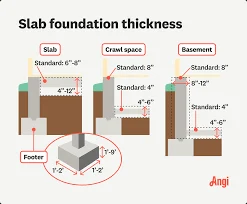
Planning an addition on your home in Riverbend or a new commercial build in the Warehouse District? Understanding how thick your concrete foundations need to be is the first step toward a project that lasts. It’s not just about pouring a slab; Edmonton’s unique soil conditions and climate demand a careful approach. Here’s what you actually need to know to ensure your investment stands solid for decades. The team at EdmontonConcrete has seen too many failures from cutting corners on foundation thickness. Getting this right protects your home from cracking, shifting, and costly repairs down the line. Recommended Thickness for Concrete Slabs and Foundations While there are minimum code requirements, recommended thickness is what truly protects your project from Edmonton’s realities. These guidelines go beyond the bare minimum to account for real-world use and long-term durability. Think of them as the smart, experienced standard. Minimum Thickness for Foot Traffic, Patios, and Sidewalks (100 mm or 4 inches) For surfaces that only need to handle people walking, a 4-inch (100 mm) slab is the standard baseline. This applies to garden paths, simple backyard patios, and most public sidewalks. The load is relatively light and evenly distributed. Even at this thickness, the subgrade must be properly compacted. A patio in Old Strathcona built on soft, uncompacted fill will crack even with a 4-inch slab. Bottom line: for foot traffic alone, 100 mm is your starting point, but never skip the prep work. Thickness for Residential Driveways and Light Vehicles (100-125 mm or 4-5 inches) Your driveway bears a heavier burden. A typical sedan weighs between 1.5 and 2 tons, concentrated on four small tire contact patches. For a standard two-car driveway in a neighbourhood like Glenora, a 4-inch slab is the absolute minimum, but 5 inches (125 mm) is the smart choice. The extra inch provides a significant margin of safety against the freeze-thaw cycle and the occasional heavier delivery truck. Many reputable contractors, including EdmontonConcrete, default to 5 inches for residential driveways to ensure longevity. Thickness for Trucks, RVs, and Heavy Loads (150 mm or 6 inches+) Planning to park a work truck, RV, or boat? You’re now in the realm of heavy point loads. These vehicles can easily weigh 3 tons or more, putting immense stress on a thinner slab. For these applications, a minimum of 6 inches (150 mm) is non-negotiable. In some cases, especially for commercial loading bays or areas with constant heavy traffic, engineering may call for 8 inches or more. This is a common consideration for properties along the industrial corridors near the Yellowhead Trail. Footing Thickness Requirements (100 mm or Greater than Projection) Footings are different from slabs. They are the wide, buried base that spreads the building’s load over the soil. The rule of thumb for footing thickness is that it must be at least as thick as the wall it supports projects outward from its center. For a standard 8-inch thick foundation wall, the footing must be at least 8 inches thick. More importantly, the Canadian Building Code specifies that the footing thickness must not be less than 100 mm. In practice, residential footings in Edmonton are typically 8 to 12 inches thick to handle our soil conditions. Alberta Building Code and Local Regulations in Edmonton Following the Alberta Building Code (ABC) isn’t just good practice—it’s the law. The code provides the minimum legal standards for safety and durability. Edmonton-specific bylaws and the realities of our climate often push practical requirements beyond these minimums. Minimum Footing Thickness per Clause 9.15.3.8.(1) The ABC is very specific. Clause 9.15.3.8.(1) states that the thickness of a concrete footing must not be less than the greater of 100 mm or the projection of the footing on either side of the supported wall, column, or pier. This is the technical basis for the “thickness equals projection” rule. This clause exists to prevent the footing from shearing or bending under load. It’s a critical calculation that forms the basis of all engineered foundation designs for homes and buildings across Alberta. Structural Analysis and Engineering Requirements For most standard single-family homes, builders use prescriptive code guidelines. However, when you have unusual soil, a steep slope, or a uniquely heavy structure, a structural analysis is required. A professional engineer will calculate the exact loads and specify footing dimensions and reinforcement. This is common for custom homes in ravine areas like Terwillegar Towne or for any commercial project. The engineer’s stamp on the drawings is your assurance that the foundation is designed for the specific conditions of your site. Site Preparation and Subgrade No matter how thick you pour your concrete, it will fail if the ground beneath it is unstable. Proper site preparation is arguably more important than the pour itself. This is where many DIY projects in Edmonton go wrong. Removing Vegetation, Dirt, and Soft Spots All organic material like grass, roots, and topsoil must be excavated down to stable, undisturbed mineral soil. Organic matter decomposes over time, leaving voids that cause settlement and cracking. Any soft, wet, or spongy areas must also be dug out and replaced with compactable material. Think of it as setting a table. You wouldn’t place a fine china plate on a wobbly, lumpy tablecloth. The same principle applies to your $15,000 concrete slab. Granular Base and Compaction (20-25 mm Material) Once you reach stable ground, you add a layer of granular base material. In Edmonton, this is typically 3/4-inch down to 1-inch (20-25 mm) crushed gravel or road crush. This layer provides a stable, draining platform. The key word is compaction. Each 4-6 inch layer of gravel must be mechanically compacted with a plate compactor or a jumping jack tamper. Properly compacted base won’t show footprints when you walk on it. Skipping this step is an invitation for the slab to sink and crack. Reinforcement and Concrete Mix Specifications Reinforcement is what turns brittle concrete into a strong, ductile structural element. It holds the concrete together as it shrinks and resists tensile forces