
You’re standing in your backyard in Altadore, coffee in hand, visualizing a new swimming pool or a modern retaining wall for your Riverbend property. Your contractor mentions “shotcrete” and “gunite,” and you nod along, but a question lingers: what’s the real difference? Knowing which one is right for your Calgary project isn’t just technical jargon—it’s the foundation of its success.
Here’s what you actually need to know to make an informed decision. OmegaReadyMix, with its years of Calgary-specific experience, knows that from the clay-heavy soils of the deep southeast to the windswept lots in Skyview Ranch, the right material choice is everything.
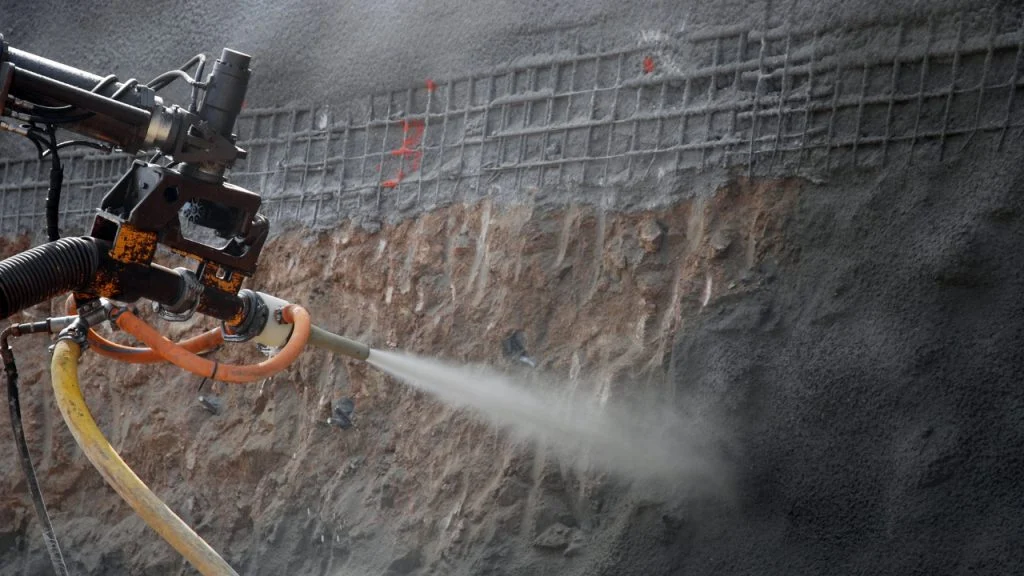
What is Shotcrete?
Think of shotcrete as ready-to-use concrete, fired out of a hose at high velocity. The concrete arrives on-site in a truck already fully mixed with water, just like the concrete you’d see for a driveway pour along Macleod Trail. This pre-mixed slurry is then pneumatically propelled through a hose and nozzle onto the surface.
Because the mix is already complete, the application process is fast and creates a dense, monolithic layer. This method is favoured for its speed and the uniformity it provides, especially on large-scale projects where consistency is key.
Wet-Mix Process
In the wet-mix shotcrete process, all ingredients—cement, aggregates, water, and any admixtures—are blended at a plant or in the transit mixer. The crew has precise control over the water-cement ratio from the start, which is critical for achieving predictable strength and durability.
This mix is then pumped to the nozzle, where compressed air propels it onto the forming surface. The main advantage here is the high volume of material that can be placed quickly, with less rebound waste compared to its dry-mix counterpart.
Key Benefits of Shotcrete
Speed is the headline benefit for shotcrete. For a commercial foundation in East Village with tight timelines, or a large retaining wall project in Springbank Hill, the ability to place concrete rapidly is a major cost and schedule advantage.
The process also results in a highly compacted, low-permeability finish that stands up well to Calgary’s freeze-thaw cycles. You get a uniform, high-strength product with less variability from batch to batch, which gives peace of mind on structurally demanding jobs.
For projects where time and consistent high-volume placement are critical, shotcrete is often the go-to choice.
For homeowners dealing with structural issues, understanding how shotcrete performs is essential—especially for basement and foundation repair projects where durability and water resistance are critical.
What is Gunite?
Gunite is often confused with shotcrete, but it represents the original “dry-mix” application method. Here, the dry sand and cement mixture is propelled through the hose, and water is only introduced at the nozzle, right at the point of application.
This on-the-fly mixing allows the nozzleman incredible control over the consistency and hydration of the mix. It’s a skill-intensive process that, when done by an experienced crew, can be tailored precisely to the job’s needs.

Dry-Mix Process
The dry-mix gunite process involves feeding a pre-blended dry powder of cement and damp sand into a pressurized hopper. This material is carried by compressed air through the delivery hose. At the nozzle, a separate water line injects the precise amount of water needed to activate the cement.
The nozzleman literally controls the mix with their trigger finger, adjusting water flow in real-time based on how the material is sticking to the surface. This hands-on control is what defines the gunite process and requires a highly trained operator.
Key Benefits of Gunite
The supreme benefit of gunite is its versatility and adaptability. Because water is added at the nozzle, the mix can be adjusted instantly—wetter for overhead work or drier for vertical walls. This makes it ideal for complex shapes and sculptural work, like the curved freeform pools popular in luxury communities like Aspen Woods.
It also generally produces less rebound than wet-mix shotcrete, meaning more of the material ends up on the wall and less on the ground. For intricate, rebar-dense projects or repairs where thickness needs to vary, gunite offers unparalleled control.
On sloped properties, shotcrete is often used for slope stabilization and retaining wall systems to prevent soil movement and erosion over time.
When you need artistic flexibility or are working on complex, reinforced geometries, gunite provides the craftsman’s touch.
Key Differences Between Shotcrete and Gunite
While both end up as hardened concrete, the journey from bag to wall is fundamentally different. It boils down to *when* the water is added and what that means for your project’s speed, cost, and finish.
Application Method and Water Addition
This is the core difference. Shotcrete (wet-mix) is concrete, fully mixed with water before it’s shot. Gunite (dry-mix) is a dry powder until the moment it leaves the nozzle. Think of it like a cake: shotcrete is a pre-mixed batter you pour; gunite is combining the flour and eggs right as you pour them into the pan.
This simple timing shift impacts everything from the equipment needed to the skill of the crew. It’s the first decision point for any contractor, including experts like OmegaReadyMix, when planning a Calgary job.
Mix Consistency and Control
With shotcrete, consistency is guaranteed at the plant. Every cubic metre that leaves the facility has the same water-cement ratio, offering predictable strength. With gunite, consistency is in the hands—literally—of the nozzle operator.
A skilled nozzleman can create the perfect texture for the task, but this also introduces a variable. The quality of the finished gunite is directly tied to the experience level of the applicator, more so than with shotcrete.
Strength and Durability
Both methods can produce high-strength, durable concrete when executed correctly. Properly applied shotcrete often has a slight edge in achieving maximum density and low permeability due to its pre-mixed, high-velocity impact.
Gunite, when applied by a master, can achieve exceptional bond strength to rebar and existing substrates because the dry material can be driven deep into crevices before hydration. For repairing older Calgary foundations in historic neighbourhoods like Inglewood, this penetration can be key.

If you want a deeper breakdown of application methods, this comparison of wet mix vs dry mix shotcrete processes explains how water timing affects strength, consistency, and performance
Slump and Rebound
“Rebound” is the material that bounces off the surface during application. Gunite typically has lower rebound loss (10-20%) because the drier mix doesn’t ricochet as easily. Shotcrete can see higher rebound (15-25%) due to its wetter, heavier mix hitting at high speed.
This isn’t just wasted material; it’s a jobsite cleanup factor. On a tight lot in Garrison Woods, managing rebound waste is a practical consideration that can affect your final cost and site restoration.
Equipment and Crew Requirements
Shotcrete requires a ready-mix truck and a pneumatic pump with a specialized nozzle. The crew size can be smaller for the actual placement, as the mixing is done automatically.
Gunite requires a dedicated guniting machine, an air compressor, and a highly skilled nozzleman who is essentially mixing the concrete in mid-air. The crew’s expertise becomes the most critical piece of equipment on site.
The choice often comes down to this: do you prioritize automated consistency (shotcrete) or artisan-level control (gunite)?
Pros and Cons of Shotcrete vs Gunite
Let’s break down the trade-offs to see which method aligns with your project’s priorities, budget, and Calgary’s specific challenges.
Shotcrete Pros and Cons
Pros: Faster application speed for large areas, highly consistent mix quality, excellent for high-volume structural work, lower labour intensity for mixing, and superior density for waterproofing applications.
Cons: Generally less flexible for complex shapes, higher rebound can mean more waste, requires continuous delivery from a plant (logistics depend on truck access), and offers less on-site adjustability if conditions change.
For a massive underground parking garage in the Beltline or a long lineal retaining wall, shotcrete’s speed and uniformity are massive advantages.
Gunite Pros and Cons
Pros: Unmatched control over consistency during placement, ideal for complex and sculptural forms, lower rebound waste, can be applied in thinner layers, and is perfect for repair and overlay work.
Cons: Highly dependent on operator skill, slower placement speed overall, potential for mix variability if the nozzleman is less experienced, and typically requires a more specialized crew.
For a custom, freeform infinity pool on a hillside lot with a view of the Rockies, or intricate architectural features, gunite’s adaptability is worth its weight.
Your project’s shape, scale, and tolerance for on-site variables will point you toward one list of pros over the other.
According to the American Shotcrete Association, shotcrete is an umbrella term that includes both wet-mix and dry-mix processes, while gunite specifically refers to the dry-mix method.
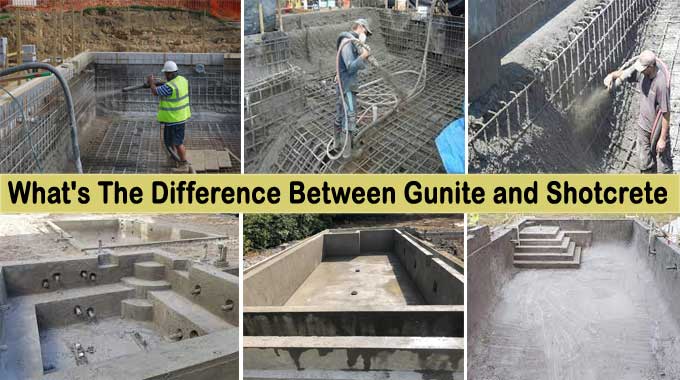
Shotcrete vs Gunite Strength: Which is Stronger?
This is the most common question, and the answer is nuanced. Both methods can achieve compressive strengths that far exceed the requirements for most residential and commercial projects—often in the range of 4,000 to 6,000 psi.
The potential strength of shotcrete is very high and more consistently achievable because the mix design is controlled at the plant. It’s reliably strong. Gunite’s strength is equally high *potential*, but it’s more sensitive to the water-cement ratio controlled at the nozzle.
An experienced nozzleman can produce gunite of exceptional strength. However, with less skilled application, the risk of improper hydration is higher, which can weaken the final product. In essence, shotcrete’s strength is engineered at the plant; gunite’s strength is crafted on-site.
For guaranteed, engineer-specified strength from edge to edge, shotcrete provides more predictable results.
Applications and Ideal Uses
Understanding where each method shines helps match the tool to the task, whether you’re in a new suburban development or a downtown core revitalization.
Residential Applications
For standard in-ground swimming pools, both are used, but gunite is the traditional favourite for custom shapes. Shotcrete excels for larger residential projects like big foundation walls, basement cores, and large retaining walls on sloping lots in communities like Silver Springs.
For a standard rectangular pool, shotcrete’s speed might win out. For that curvaceous, resort-style pool, gunite is the artist’s choice.
Commercial and Structural Applications
Shotcrete dominates here. Its speed and consistency are perfect for stabilizing excavations (like those seen around new Calgary Cancer Centre construction), tunnel linings, and seismic retrofits. High-rise core walls and elevator shafts are almost exclusively shotcrete due to the volume and need for uniform properties.
Pool Construction
This is the classic battleground. Gunite has long been the gold standard for high-end custom pools because of its sculptability. Shotcrete is gaining ground for larger, simpler pool shapes due to its faster cure time and efficiency.
The choice often comes down to the pool design and the contractor’s expertise. A complex vanishing-edge pool overlooking the Bow River Valley likely calls for gunite.
Retaining Walls and Infrastructure
For large-scale, soil-retaining walls—like those along Stoney Trail or in new community developments—shotcrete is typically used for its rapid construction and structural uniformity. Gunite finds its niche in repairing and resurfacing older retaining walls or creating thinner, more architectural wall facades.
Match the method to the mission: high-volume, structural repetition favors shotcrete; complex, custom, or repair work leans toward gunite.
Cost Comparison: Gunite vs Shotcrete
In Calgary, material costs are similar, but the *application* cost differs. Generally, gunite can be 10-20% more expensive per cubic yard placed due to the higher labour intensity and specialized skill required.
Shotcrete cost is more tied to volume and access. You pay for the ready-mix concrete and the pumping operation. For a large, straightforward wall, shotcrete can be more cost-effective. For a small, intricate job, gunite’s higher per-yard rate might be offset by less total material waste.
Always get detailed quotes that break down material, labour, and equipment. A surprisingly low quote might indicate a crew less experienced with the chosen method, which is a risk not worth taking in our climate.
| Factor | Shotcrete | Gunite |
|---|---|---|
| Cost | Generally lower per unit volume for large projects. Cost is driven by concrete volume + pump. | Generally higher per unit volume. Cost is driven by specialized labour + equipment. |
| Durability | Excellent, with high density and low permeability. Highly predictable. | Excellent when applied correctly. Bond strength to existing surfaces can be superior. |
| Best For | Large-scale, high-volume projects (foundations, tunnels, big walls), simple pool shapes, tight timelines. | Complex shapes, sculptural work, repairs, overlays, custom freeform pools. |
| Calgary Climate Suitability | High. Dense, low-permeability finish excels against freeze-thaw cycles. | High. Properly applied, it provides excellent durability. Skill of applicator is critical for long-term performance. |
| Maintenance Required | Low. The monolithic, uniform surface is straightforward to seal and maintain. | Low. Similar long-term maintenance needs, assuming a high-quality initial application. |
Which is Best for Your Project?
So, how do you choose? Start by asking your contractor—and yourself—a few key questions. Is the design simple and repetitive, or complex and artistic? Is the project large-scale or a smaller, intricate job? What is the local crew’s proven expertise with each method?
For most large-scale structural work in Calgary, from foundation cores in new Evanston subdivisions to commercial retaining walls, shotcrete offers the right blend of speed, consistent strength, and cost-effectiveness. For the quintessential custom backyard oasis or a detailed repair on a heritage property, gunite’s artisan approach is often the preferred path.
The best choice is the one that aligns with your project’s specific design, timeline, and the proven skill set of your concrete partner.
FAQs
You’ve got questions—Calgary homeowners and builders ask us these all the time. Here are clear, direct answers.
Can shotcrete or gunite be applied in Calgary’s winter?
Yes, but with critical precautions. Both processes can use heated water and aggregates, and admixtures can accelerate set times. The shotcrete or gunite must be protected with insulated blankets during curing to prevent freezing, which can ruin the strength.
Winter application adds complexity and cost, so most exterior projects are scheduled for the warmer months. For an interior project like a basement core wall, season matters less.
Which method is better for a swimming pool in Calgary?
For a standard geometric pool, high-quality shotcrete is an excellent, often more economical choice. For a freeform, lagoon-style, or complex infinity-edge pool, gunite remains the top choice due to its sculptability.
The most important factor is choosing a contractor with extensive, proven experience building pools with your chosen method in our climate. A poorly built pool of either type will have problems.
How long do shotcrete and gunite pools last?
A properly constructed and maintained shotcrete or gunite pool can last 50 years or more. The longevity has more to do with the quality of construction, steel reinforcement, plumbing, and finishes than the choice between the two methods.
In Calgary, ensuring proper waterproofing and coping to handle ground movement is as important as the shell material itself.
Is one more eco-friendly than the other?
The differences are minimal. Shotcrete can have slightly higher cement content for high early strength, while gunite may use less water overall. The most significant environmental impact comes from the cement production itself, which is similar for both.
Choosing a local supplier like OmegaReadyMix minimizes transportation emissions, which is a tangible way to reduce the project’s footprint.
Conclusion
The debate between shotcrete and gunite isn’t about which is universally better, but which is better for *your* specific vision and Calgary’s unique conditions. Shotcrete brings plant-controlled consistency and speed for large-scale structural work. Gunite offers the artisan’s touch for complex, custom shapes.
Your project’s success hinges on matching the method to the mission and partnering with a crew that has deep expertise in that method. For over a decade, OmegaReadyMix has been that partner for Calgary homeowners and contractors, providing the right material and advice for projects from custom pools in Britannia to foundational supports in the downtown core.
Ready to build with confidence? Let’s discuss your shotcrete or gunite project and find the right solution for your Calgary property.
