
If you’re planning a custom pool in Aspen Woods or tackling a major retaining wall project in Tuscany, you’ve likely heard two terms thrown around: shotcrete and gunite. Knowing the difference is more than just industry jargon—it’s about ensuring your project is built to last through Calgary’s tough freeze-thaw cycles. Here’s what Calgary homeowners and contractors actually need to know to make the right call for their specific job.
What is Shotcrete?
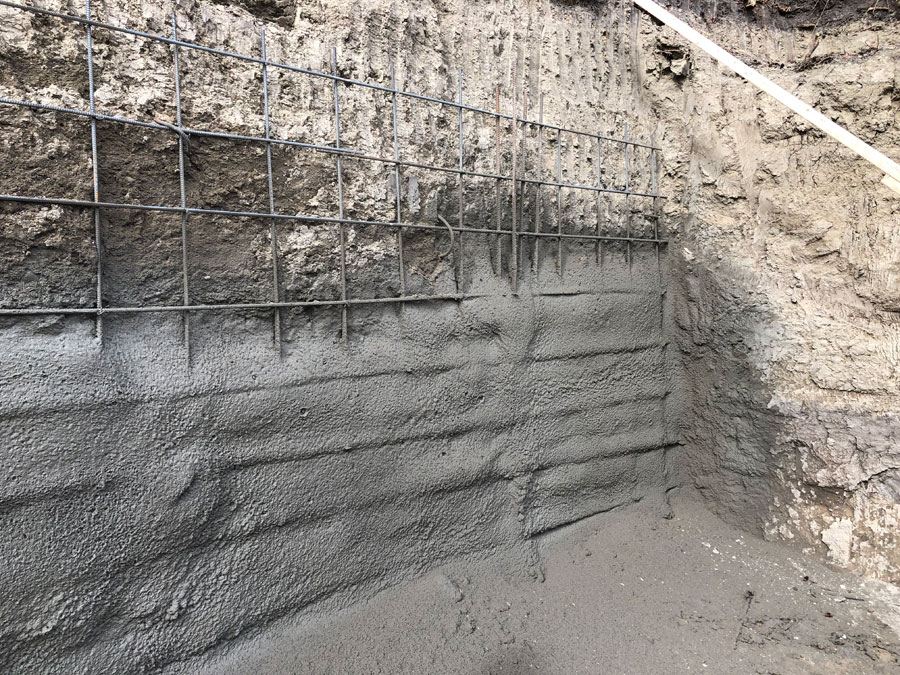
Shotcrete is a method of placing concrete where a pre-mixed, wet concrete mixture is pneumatically projected at high velocity onto a surface. Think of it like a high-powered hose spraying a ready-to-go concrete mix. This technique is prized for its efficiency and ability to create uniform, dense layers. The key is that all the ingredients—cement, aggregates, and water—are combined before they hit the nozzle.
For complex shapes or vertical applications, like the curved walls of a luxury home feature in Mount Royal, shotcrete provides exceptional control. It bonds incredibly well to existing surfaces and can be applied in thinner layers than traditional poured concrete. That makes it a go-to for structural repairs and intricate architectural work across Alberta.
Wet Shotcrete Process
The process begins with a fully hydrated concrete mix being loaded into a shotcrete rig’s hopper. This mix is then pumped through a delivery hose to a nozzle, where compressed air propels it onto the target surface. The operator at the nozzle has direct control over the placement and pattern.
Because the mix is wet, it arrives at the surface with a consistent slump and workability. This allows for a smoother finish right out of the gun, which can be further troweled if needed. It’s a method favoured for its speed on large commercial projects, like the foundational work seen along the Bow River pathway developments.
For projects demanding a fast, consistent application with minimal rebound waste, wet-mix shotcrete is often the superior choice.
What is Gunite?
Gunite, often used interchangeably with “dry-mix shotcrete,” is a process where dry cement and aggregate are propelled through a hose, with water added exclusively at the nozzle just before ejection. This method offers the operator significant on-the-fly control over the mix’s water content. It’s the classic technique behind many of Calgary’s iconic backyard swimming pools and free-form rock landscapes.
The dry materials are mixed in a chamber and blown through the hose using compressed air. At the nozzle, a skilled nozzleman injects a precise stream of water, hydrating the mix instantly as it’s sprayed. This allows for immediate adjustments based on the substrate’s absorption and the desired consistency.
Dry Gunite Process
The gunite process relies heavily on the skill of the nozzle operator. They control the water injection valve, directly influencing the mix’s workability and final strength. Too little water and the material won’t adhere properly; too much and it can sag or run.
This hands-on control makes gunite exceptionally versatile for sculptural work. It’s the reason you see those perfectly smooth, radiused pool coves in communities like Lake Bonavista. The operator can build up layers gradually, creating strong, monolithic structures without the need for extensive formwork.
Gunite’s strength lies in its adaptability, making it ideal for custom, artistic, or complex vertical applications where standard forms won’t work.
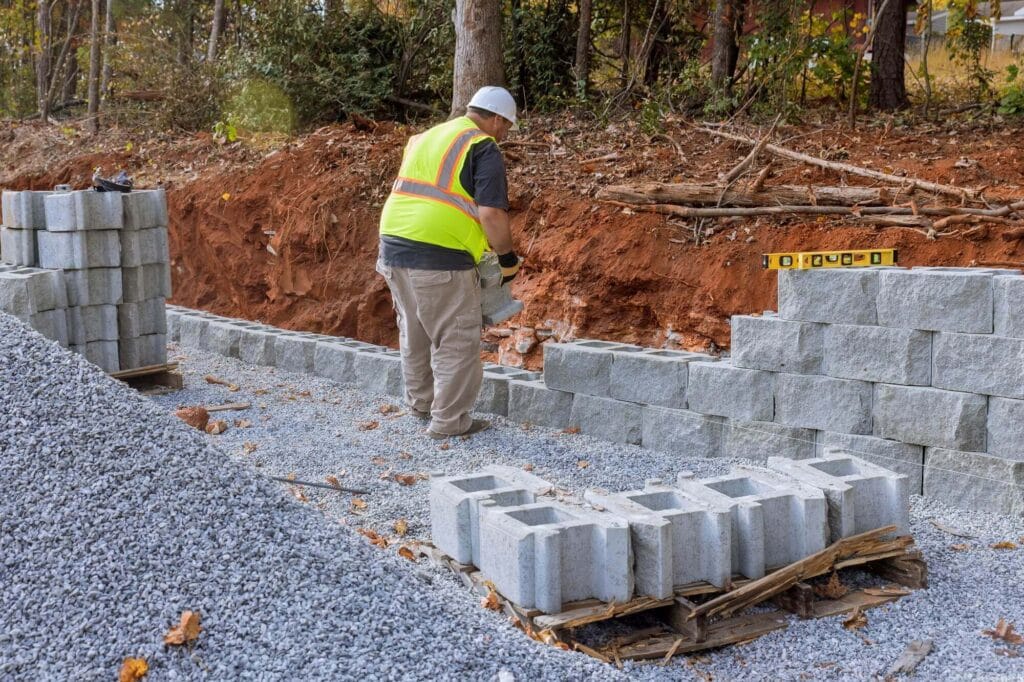
According to industry standards from the American Concrete Institute (ACI), proper shotcrete application significantly improves structural durability
Key Differences Between Shotcrete and Gunite
While both methods involve spraying concrete, the core differences lie in *when* the water is added and *how* the material behaves during application. These distinctions directly impact your project’s cost, timeline, and final quality.
Mixing and Water Addition
This is the most fundamental difference. Shotcrete uses a pre-mixed, wet concrete, similar to what you’d see in a standard Omega ReadyMix truck. Gunite, conversely, combines dry cement and aggregate, with water added at the very last second at the nozzle. The wet-mix process offers more consistent hydration, while the dry-mix allows for immediate adjustment.
Application Method
Shotcrete is typically pumped through the hose and then accelerated by compressed air at the nozzle. Gunite uses compressed air to blow the dry mix through the hose, injecting water at the tip. This leads to different equipment setups and requires different operator skillsets. A gunite nozzleman needs extensive experience to judge the water ratio correctly in real-time.
Slump and Consistency
Shotcrete arrives with a predetermined, consistent slump because it’s mixed at the plant. Gunite’s consistency is variable and controlled on-site. This means shotcrete is less prone to sag on vertical surfaces, while gunite can be made stiffer or wetter to suit immediate conditions, like a porous existing wall in an older Bridgeland renovation.
Strength and Quality Control
Both methods can achieve high strengths, but control points differ. Shotcrete quality is largely determined at the batching plant, offering predictable results. Gunite quality is heavily dependent on the nozzle operator’s expertise. A top-tier operator can produce incredibly strong, dense material, but the risk of inconsistency is higher with less experienced crews.
Your choice often comes down to prioritizing consistent plant-controlled quality (shotcrete) versus versatile, operator-dependent adaptability (gunite).

To better understand performance differences, explore our guide on differences between Shotcrete vs Gunite before choosing a method.
Pros and Cons of Shotcrete
Understanding the trade-offs of each method is key to a successful project. Shotcrete brings modern efficiency but isn’t perfect for every scenario.
Advantages of Shotcrete
Shotcrete excels in speed and volume. The pre-mixed material allows for a much faster rate of placement, which can significantly shorten project timelines. It also produces less rebound (wasted material that bounces off the surface), making it cleaner and more cost-effective on large, straightforward pours.
The consistency of the wet mix leads to more uniform density and strength throughout the applied layer. This is a major advantage for critical structural elements, like foundation walls or seismic retrofits, where predictable performance is non-negotiable.
Disadvantages of Shotcrete
The primary drawback is its lack of on-site adjustability. Once the mix leaves the plant, its water content is fixed. This can be problematic if site conditions change, like unexpected substrate absorption. It also requires more sophisticated pumping equipment, which can increase mobilization costs.
For very small, intricate, or sculptural jobs, the faster set time of wet-mix shotcrete can be a hindrance. It offers less “working time” for detailed shaping compared to gunite, which can be adjusted on the fly.
Choose shotcrete when your priority is speed, consistency, and high-volume application with minimal waste.
Pros and Cons of Gunite
Gunite is the artisan’s choice, offering unparalleled control but demanding a higher level of craft.
Advantages of Gunite
The biggest advantage is flexibility. The operator can instantly adjust the water-cement ratio to create the ideal consistency for the task at hand—stiffer for overhead work or wetter for intricate detailing. This makes it perfect for free-form projects, like custom waterfalls or curved landscape features.
Gunite equipment is generally simpler and more portable than shotcrete rigs. This can make it more accessible for projects in tight spaces or areas with limited access, such as backyard renovations in established communities like Elbow Park.
Disadvantages of Gunite
The quality is almost entirely in the hands of the nozzleman. Inconsistent water addition can lead to weak spots, higher porosity, and reduced durability. It also typically generates more rebound (waste), which increases cleanup time and material cost.
The application process is generally slower than shotcrete, as the operator must carefully build up layers. This can extend project timelines and labour costs, especially on bigger jobs.
Opt for gunite when your project involves complex shapes, requires on-the-fly adjustments, or has limited site access for larger equipment.
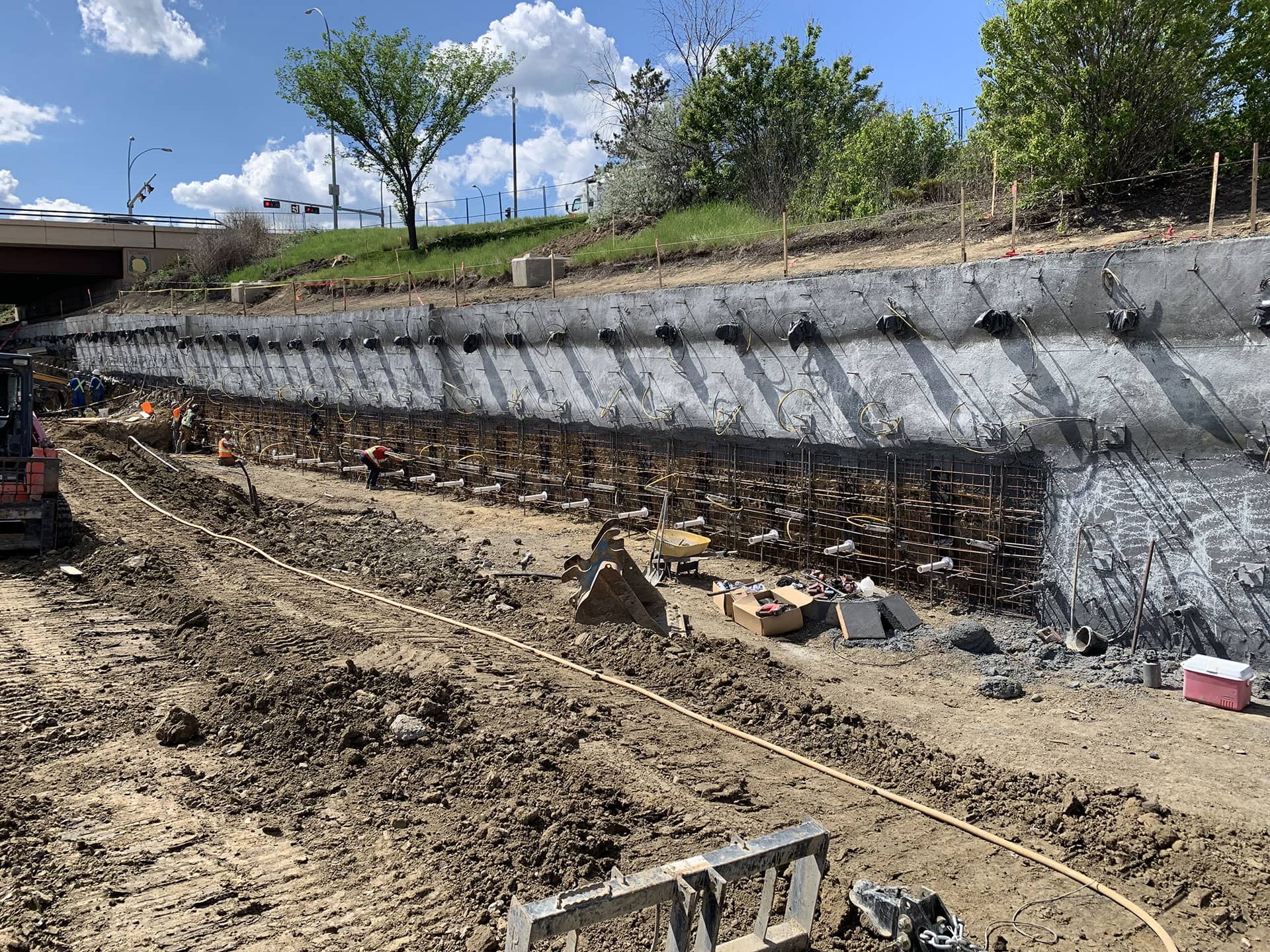
For hillside projects, shotcrete for slope stabilization and retaining walls offers long-term protection against erosion and soil movement.
Shotcrete vs Gunite Comparison
Let’s break down the decision into a straightforward, side-by-side comparison. This table cuts through the confusion to show you which method typically wins in key categories for Calgary projects.
| Factor | Shotcrete (Wet-Mix) | Gunite (Dry-Mix) |
|---|---|---|
| Cost | Generally lower for large-volume projects due to faster application and less waste. | Can be higher due to slower placement, more labour, and higher material waste (rebound). |
| Durability | High and very consistent, thanks to plant-controlled mixing. | Can be very high, but depends heavily on operator skill and consistency. |
| Best For | Large-scale projects, retaining walls, foundational work, tunnel linings, high-volume applications. | Custom pools, sculptural elements, complex shapes, repairs, projects with difficult access. |
| Calgary Climate Suitability | Excellent. The dense, low-permeability finish resists water ingress and freeze-thaw damage. | Excellent when applied correctly. Proper compaction and low water/cement ratio are critical for durability. |
| Maintenance Required | Low. The uniform application typically results in a longer service life with fewer issues. | Low to Medium. Quality depends on application; poorly applied gunite may be more prone to future wear. |
Cost Comparison
For a standard residential swimming pool in Calgary, shotcrete often comes in at a slightly lower price per cubic yard due to its efficiency. However, for a highly customized, free-form pool with intricate features, a gunite contractor’s artistry might provide better value despite a potentially higher rate. Always get itemized quotes that break down material, labour, and equipment costs.
Time and Application Speed
Shotcrete is the clear winner for speed. A wet-mix crew can place a tremendous volume of material in a single day. Gunite application is a slower, more deliberate process of building up layers. This means your project site in Mackenzie Towne might be active for a longer period with gunite.
Customization and Flexibility
Gunite provides unmatched flexibility for on-site changes and artistic shaping. If you dream of a natural rock grotto or a uniquely shaped water feature, gunite is the material that can bring it to life. Shotcrete is better for predefined, engineered shapes where consistency is the goal.
Finish and Durability
Both methods can produce extremely durable finishes when executed properly. Shotcrete offers more guaranteed consistency from the start. A master gunite applicator can achieve equal or greater density and strength, but it requires a trusted, experienced professional to ensure no weak spots are created during application.
Logistics and Mess
Shotcrete requires ready-mix truck access and larger pump equipment. Gunite equipment is more portable, making it easier to use in backyards with narrow gates or limited space. However, gunite typically creates more dust and rebound waste, which means more site cleanup is involved.
For most large, structural Calgary projects, shotcrete offers the best balance of speed, cost, and predictable quality.
Applications of Shotcrete and Gunite
In practice, both techniques have their ideal uses. Your project’s specific requirements will often point directly to one being the better choice.
Pool Construction
This is the most common battleground for the shotcrete vs gunite debate. For a standard rectangular or geometric pool, shotcrete is often more cost-effective and faster. For a custom, free-form lagoon-style pool with beaches, coves, and integrated spas, gunite is the undisputed champion due to its sculptural flexibility.
Many top Calgary pool builders are skilled in both methods and will recommend based on your design. The dense, low-permeability shell created by either method is crucial for surviving our winters without cracking.
Other Uses
Beyond pools, shotcrete shines in civil engineering: stabilizing slopes along roads like Stoney Trail, building tunnel linings, and constructing large retaining walls. Gunite is frequently used for architectural sculptural work, repairing historic concrete structures, and creating intricate landscape features.
Match the method to the mission: high-volume structural work favours shotcrete, while artistic and complex shapes call for gunite.
Which is Better: Shotcrete or Gunite?
There’s no universal “best” option—only the best option for *your* project. For large-scale, engineered structures where consistency and speed are paramount, shotcrete is typically the superior choice. Its plant-controlled quality and efficient application make it a reliable workhorse for Calgary’s commercial and heavy civil projects.
For residential projects demanding artistry, customization, and the ability to adapt on-site, gunite remains the gold standard. The skill of the operator becomes the most critical factor, so choosing an experienced contractor is essential.
Your final decision should be made in consultation with your concrete contractor. A reputable local expert like Omega ReadyMix can assess your site, understand your vision, and recommend the method that balances your budget, timeline, and quality expectations. They know which approach will stand up best to the specific soil conditions in your neighbourhood, whether you’re in the new developments of Livingston or the mature lots of Hillhurst.
FAQs About Shotcrete and Gunite in Calgary
Which is more expensive, shotcrete or gunite?
For a typical project, gunite often carries a slightly higher price tag due to its slower application and higher labour intensity. However, the final cost is so project-specific that a direct comparison is misleading. A simple shotcrete retaining wall might be cheaper, but a complex gunite pool could offer better value for its intended design.
The best approach is to get detailed quotes for both methods from qualified contractors. Ensure the quotes compare the same scope, finish quality, and warranty.
Is one method stronger than the other?
Both methods can achieve compressive strengths that far exceed the requirements for most residential and commercial applications. The real difference is in consistency.
Shotcrete provides a more uniformly strong result because the mix is controlled at the plant. Gunite can achieve equal strength, but its quality is directly tied to the nozzle operator’s skill in maintaining the perfect water-cement ratio throughout the job.
Can gunite or shotcrete be applied in Calgary’s winter?
Yes, but with significant precautions. Both processes require special cold-weather concreting practices, such as using heated water and aggregates, protecting the fresh application with insulated blankets, and monitoring temperatures closely.
Most reputable contractors prefer to schedule this work during warmer months (May through September) to ensure optimal curing and avoid the added cost and risk of winter concreting. Planning your project for the Calgary build season is always advised.
How long do shotcrete and gunite pools last in our climate?
A properly constructed and maintained shotcrete or gunite pool shell can last 50 years or more, even with Calgary’s aggressive freeze-thaw cycles. The key is in the quality of the application and the finishing.
A high-quality plaster or pebble finish, combined with proper water chemistry maintenance, will protect the underlying shell. The initial investment in a skilled contractor using the right method pays off for decades.
Your choice should hinge less on which material is “stronger” and more on which process best suits your design, budget, and the contractor’s proven expertise.
Conclusion
Choosing between shotcrete and gunite ultimately depends on the nature of your project and the expertise of your contractor. For engineered efficiency and speed on large-scale work, shotcrete is often the best path forward. For custom, artistic freedom and complex forms, gunite’s adaptability is unmatched.
Both methods, when executed by seasoned professionals, will deliver a durable, long-lasting result capable of withstanding Calgary’s unique climate challenges. The most important step is partnering with a contractor who deeply understands both techniques and can guide you transparently.
Ready to move forward with confidence on your concrete project? Discuss your specific needs with the local experts at Omega ReadyMix. We can help you navigate the shotcrete vs gunite decision to ensure your vision becomes a reality, built to last.
