
Flooring decisions are no longer just about durability—they’re about style, sustainability, and long-term value. In Edmonton, where temperature swings, moisture, and heavy use can quickly wear down traditional flooring, property owners are searching for smarter solutions. Polished concrete floors have emerged as a modern answer, offering a sleek appearance, exceptional strength, and low maintenance that fits both residential and commercial spaces.
Once associated mainly with warehouses and industrial buildings, polished concrete has evolved into a design-forward flooring option trusted by architects, builders, and homeowners alike. In this guide, we’ll explore what polished concrete floors are, why they’re gaining popularity in Edmonton, and how they deliver lasting performance in Canada’s demanding climate.

Introduction to Polished Concrete Floors
Why Polished Concrete Is Gaining Popularity in Edmonton
Edmonton property owners face unique challenges: freeze-thaw cycles, moisture migration through slabs, and high-traffic demands in both homes and commercial facilities. Polished concrete floors address these issues head-on. By mechanically grinding and refining the concrete surface, contractors create a dense, durable floor that resists cracking, dusting, and moisture-related damage.
According to industry data from the American Society of Concrete Contractors, properly polished concrete can last 20–30 years or more with minimal maintenance—often outlasting vinyl, tile, and many coated flooring systems. For Edmonton homeowners and business owners focused on long-term value, that durability is a major selling point.
From Industrial Roots to Modern Design Statement
Historically, concrete floors were hidden under carpet, tile, or epoxy coatings. Today, exposed and polished concrete is celebrated for its clean lines and contemporary aesthetic. Designers now use polished concrete as a visual feature, pairing it with wood, steel, and glass to create modern interiors that feel both warm and refined.
Retail stores, restaurants, and custom homes across Edmonton are embracing polished concrete for its ability to reflect light, enhance open-concept spaces, and deliver a high-end look without excessive materials.
Addressing Common Flooring Challenges in Canadian Climates
Traditional flooring materials can struggle in Canadian conditions. Hardwood may warp, tile grout can crack, and coatings can peel under temperature fluctuations. Polished concrete floors are different. Because the finish is part of the slab itself—not a layer applied on top—it moves naturally with the concrete and resists damage caused by seasonal expansion and contraction.
For exterior areas where texture and drainage matter, open-pit aggregate concrete surfaces offer a rugged alternative to polished finishes while maintaining long-term durability.
What Are Polished Concrete Floors?
Definition and Core Characteristics
Polished concrete floors are created by mechanically grinding a concrete slab using progressively finer diamond abrasives. The process densifies the surface, closes pores, and produces a smooth, reflective finish. The result is a floor that is hard-wearing, dust-resistant, and visually striking.
Key characteristics include:
- High compressive strength and abrasion resistance
- Low porosity and improved moisture control
- Minimal need for waxes, coatings, or harsh chemicals
Surface Densification Explained
A critical step in polishing is the application of a concrete densifier—typically a lithium or sodium silicate solution. This material reacts chemically with the concrete to form additional calcium silicate hydrate, increasing surface hardness. Studies published in Concrete Construction Magazine show densified concrete surfaces can be up to 40% harder than untreated slabs.
Mechanical Polishing vs. Coatings
Unlike epoxy or acrylic coatings that sit on top of concrete, polished concrete is created through mechanical refinement. This means there’s no layer to peel, bubble, or delaminate over time—making it ideal for high-traffic Edmonton environments.
How Polished Concrete Differs from Epoxy and Tile
Epoxy floors rely on surface adhesion, which can fail if moisture rises through the slab. Tile introduces grout lines that require ongoing maintenance. Polished concrete eliminates these weaknesses by transforming the slab itself into the finished floor.
Homeowners looking to personalize their interiors often explore transforming their home space with colored concrete, using dyes or stains to add warmth and character to polished floors.
Benefits of Polished Concrete Flooring
Exceptional Durability for High-Traffic Areas
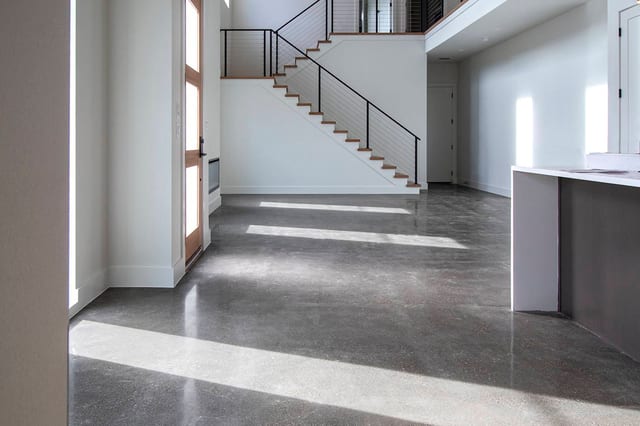
Polished concrete floors are engineered to handle heavy foot traffic, equipment loads, and daily wear. This makes them a popular choice for garages, basements, retail stores, warehouses, and busy households.
Low Maintenance & Long-Term Cost Savings
Maintenance typically involves simple dust mopping and occasional wet cleaning with a neutral cleaner. There’s no need for waxing, stripping, or recoating—saving property owners thousands of dollars over the life of the floor.
Modern Aesthetic with Custom Finish Options
From subtle matte finishes to high-gloss, mirror-like surfaces, polished concrete offers flexibility that few flooring options can match. Aggregate exposure levels and color treatments allow each floor to be customized to the space.
Moisture Resistance & Thermal Performance
In Edmonton basements and slab-on-grade homes, moisture control is critical. Polished concrete’s low permeability helps manage vapor transmission, reducing mold risk and improving indoor air quality.
Sustainable & Eco-Friendly Flooring Choice
Because polished concrete uses the existing slab, it reduces the need for additional materials. The U.S. Green Building Council recognizes polished concrete as a sustainable flooring option that can contribute to LEED credits through material reuse and improved light reflectivity.
Polished Concrete Floor Finishes & Design Options
Levels of Gloss (Matte, Satin, High-Gloss)
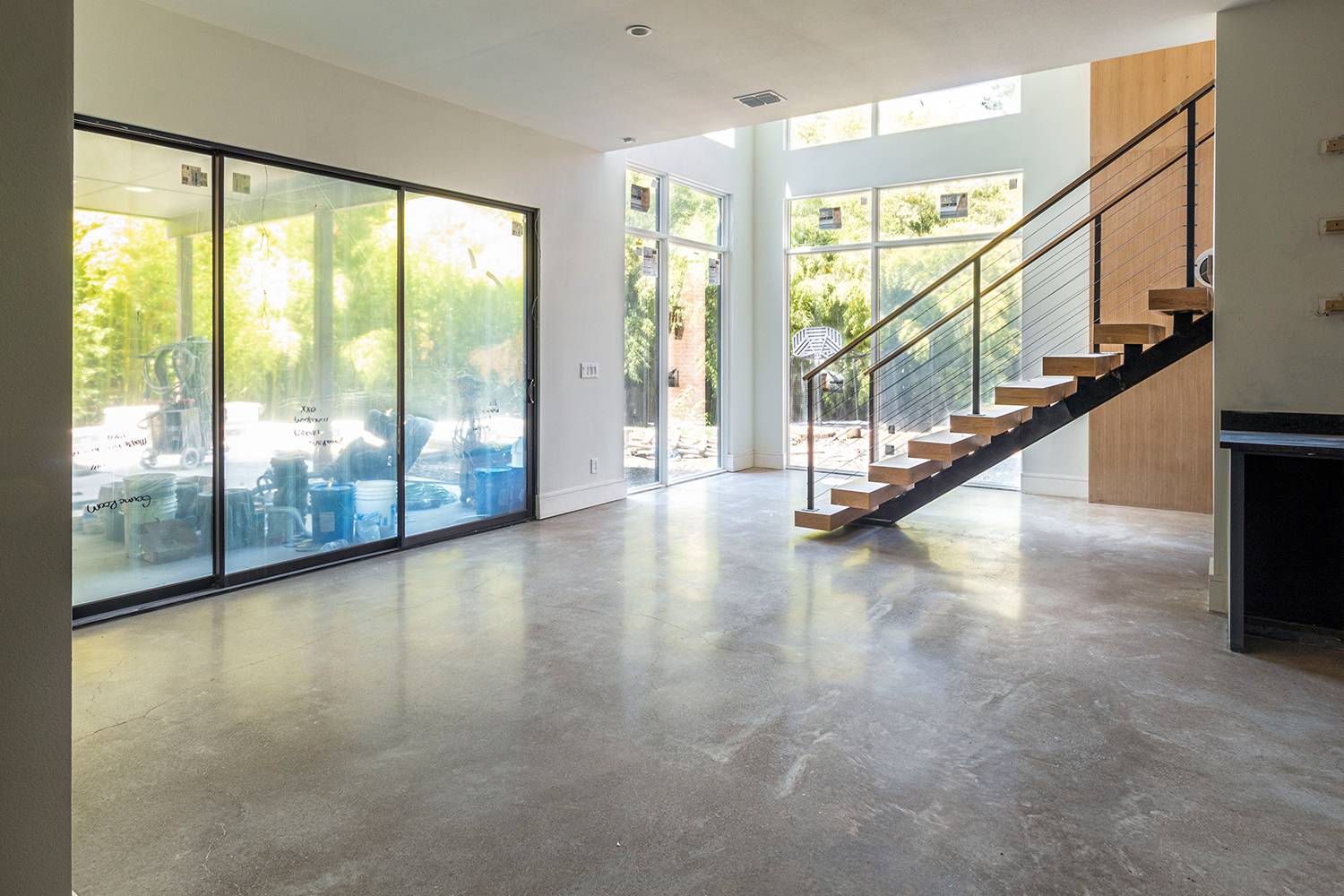
Gloss levels are controlled by the final grit used in polishing. Matte finishes offer a soft, understated look, while high-gloss floors maximize light reflection—often reducing the need for artificial lighting in commercial spaces.
Aggregate Exposure Levels
Cream Finish
This finish exposes minimal aggregate, showcasing the natural cement paste. It’s popular in modern homes and offices for its smooth, minimalist appearance.
Salt-and-Pepper Finish
A light grind reveals fine aggregate, creating subtle texture and visual interest without overwhelming the space.
Full Aggregate Finish
Deeper grinding exposes larger stones within the concrete, resulting in a terrazzo-like look often used in commercial or architectural applications.
Decorative Enhancements
Concrete Dyes & Stains
Dyes and stains allow for customized color tones—from warm earth hues to bold contemporary shades—without compromising durability.
Saw Cuts, Patterns & Borders
Decorative saw cuts can mimic large tile layouts or add geometric patterns, enhancing visual appeal while maintaining a seamless surface.
Anti-Slip Treatments
For safety-sensitive areas, anti-slip additives can be incorporated without sacrificing the clean look of polished concrete floors.
Polished Concrete for Residential Spaces
.webp)
Living Rooms, Kitchens & Basements
In Edmonton homes, polished concrete floors are increasingly used in main living areas, kitchens, and basements where durability and moisture resistance matter most. Unlike laminate or carpet, polished concrete won’t swell, stain easily, or trap allergens—making it an excellent choice for families, pets, and allergy-sensitive households.
Basements in particular benefit from polished concrete. Since the finish is breathable and resistant to moisture vapor, it helps reduce musty odors and long-term slab damage that often affect below-grade spaces.
Modern Homes, Lofts & Acreage Builds
Open-concept homes, modern infills, and acreage builds around Edmonton often feature polished concrete as a design anchor. The floor’s neutral tone complements wood beams, exposed steel, and large windows, creating a clean, architectural aesthetic that ages gracefully.
Comfort, Radiant Heating & Indoor Air Quality
Polished concrete pairs exceptionally well with in-floor radiant heating—a popular option in Alberta. Concrete’s thermal mass helps retain heat, improving energy efficiency and comfort during long winters. Additionally, the absence of adhesives, grout, and fibers improves indoor air quality by reducing VOCs and allergens.
Commercial & Industrial Polished Concrete Applications
Retail Stores & Showrooms
Retailers value polished concrete floors for their durability, light reflectivity, and low upkeep. A brighter floor enhances product visibility and creates a clean, modern shopping experience while reducing lighting costs.
Warehouses & Distribution Centres
In industrial environments, polished concrete withstands forklift traffic, pallet movement, and heavy loads. Densified surfaces resist dusting, which protects inventory and improves worker safety.
Office Buildings & Mixed-Use Developments
Offices and commercial developments across Edmonton are choosing polished concrete for its professional appearance and long lifecycle. It supports flexible layouts and minimizes downtime associated with flooring repairs or replacements.
The Polished Concrete Installation Process
Site Assessment & Surface Preparation
Every successful polished concrete project begins with evaluating the existing slab. Contractors assess flatness, strength, cracks, and moisture levels to determine the appropriate grinding approach.
Grinding Stages Explained
Polishing progresses through multiple grinding stages using diamond abrasives—from coarse grits that level the surface to fine grits that refine it. Each step improves smoothness and prepares the slab for densification.
Densifying & Sealing the Concrete
A liquid densifier is applied to harden the surface, followed by optional penetrating sealers that enhance stain resistance while maintaining breathability.
Final Polishing & Quality Control
The final polishing stage determines the floor’s sheen and clarity. Professional crews perform detailed inspections to ensure consistent gloss, slip resistance, and finish quality throughout the space.
Polished Concrete Floor Costs in Edmonton
Average Cost Per Square Foot
In the Edmonton area, polished concrete floors typically range from $6 to $12 per square foot, depending on slab condition, finish level, and project size.
Factors That Influence Pricing
- Condition of the existing concrete slab
- Desired level of gloss and aggregate exposure
- Decorative elements such as dyes or saw cuts
- Residential vs commercial scale
Cost Comparison Table
| Flooring Type | Average Lifespan | Maintenance Level | Relative Cost |
|---|---|---|---|
| Polished Concrete | 20–30+ years | Low | Moderate |
| Epoxy Flooring | 5–10 years | Medium | Low–Moderate |
| Tile Flooring | 10–20 years | High (grout) | Moderate–High |
Maintenance & Longevity of Polished Concrete Floors
Daily & Weekly Cleaning Best Practices
Routine maintenance involves dust mopping and occasional damp mopping with a pH-neutral cleaner. This simple routine keeps floors looking new for years.
Long-Term Maintenance Schedule
Unlike coated floors, polished concrete rarely requires refinishing. Periodic burnishing may be recommended in high-traffic commercial spaces to restore shine.
Expected Lifespan
With proper care, polished concrete floors can last the lifetime of the building—making them one of the most cost-effective flooring options available.
Polished Concrete vs Other Flooring Options
Polished Concrete vs Epoxy Flooring
Epoxy relies on surface adhesion and can fail under moisture pressure. Polished concrete eliminates this risk by integrating the finish into the slab itself.
Polished Concrete vs Vinyl & Laminate
While vinyl and laminate offer quick installation, they lack the durability and sustainability of polished concrete—often requiring replacement within a decade.
Choosing the Right Concrete Contractor in Edmonton
What to Look for in a Polished Concrete Specialist
Experience, proper equipment, and a strong local portfolio are essential. Polished concrete is a specialized craft that requires trained technicians and professional-grade grinders.
Importance of Local Experience
Edmonton’s climate and soil conditions demand contractors who understand local challenges and best practices.
Why Edmonton Concrete Services Is the Right Choice
Local Expertise & Proven Results
Edmonton Concrete Services brings hands-on experience across residential, commercial, and industrial projects throughout the Edmonton region.
Professional Team & Modern Equipment
Our skilled crews use advanced polishing systems and proven techniques to deliver consistent, high-quality results.
Integrated Concrete Solutions
From flatwork and driveways to cribbing and polished floors, we provide end-to-end concrete services tailored to your project.
Frequently Asked Questions (FAQ)
Are polished concrete floors slippery?
Despite their shine, polished concrete floors offer excellent slip resistance and can be enhanced with anti-slip treatments.
Can existing concrete be polished?
Yes. Most existing slabs can be polished if they are structurally sound.
Is polished concrete cold in winter?
Concrete retains heat well, especially when paired with radiant heating systems.
How long does installation take?
Most residential projects are completed within a few days, while larger commercial jobs may take longer.
Conclusion: Is Polished Concrete Right for Your Space?
Polished concrete floors offer a rare combination of durability, modern design, and long-term value. For Edmonton homes and businesses seeking a flooring solution that performs as well as it looks, polished concrete is a smart, future-proof investment.
Get a Free Polished Concrete Floor Quote in Edmonton
Ready to transform your space with polished concrete floors? Contact Edmonton Concrete Services today for expert advice, a site assessment, and a no-obligation quote. Our team is here to help you build a floor that lasts.
