
Parking lot concrete installation & repair in Edmonton helps commercial and industrial properties fix cracking, ponding water, and freeze–thaw damage while extending the life of their parking surfaces. Edmonton’s freeze-thaw cycles, de-icing salts, and heavy traffic can punish flatwork fast—especially when the base, joints, and drainage weren’t built for local conditions. The good news: with the right plan, parking lot concrete installation & repair in Edmonton can deliver a clean, durable surface that looks professional, stays safer, and reduces long-term maintenance.
Written by: The team at Edmonton Concrete Services. We provide concrete production and flatwork services across the Edmonton area with a professional crew and modern equipment—helping property owners, builders, and facility managers install and repair concrete parking lots with a focus on durability, scheduling, and site safety.
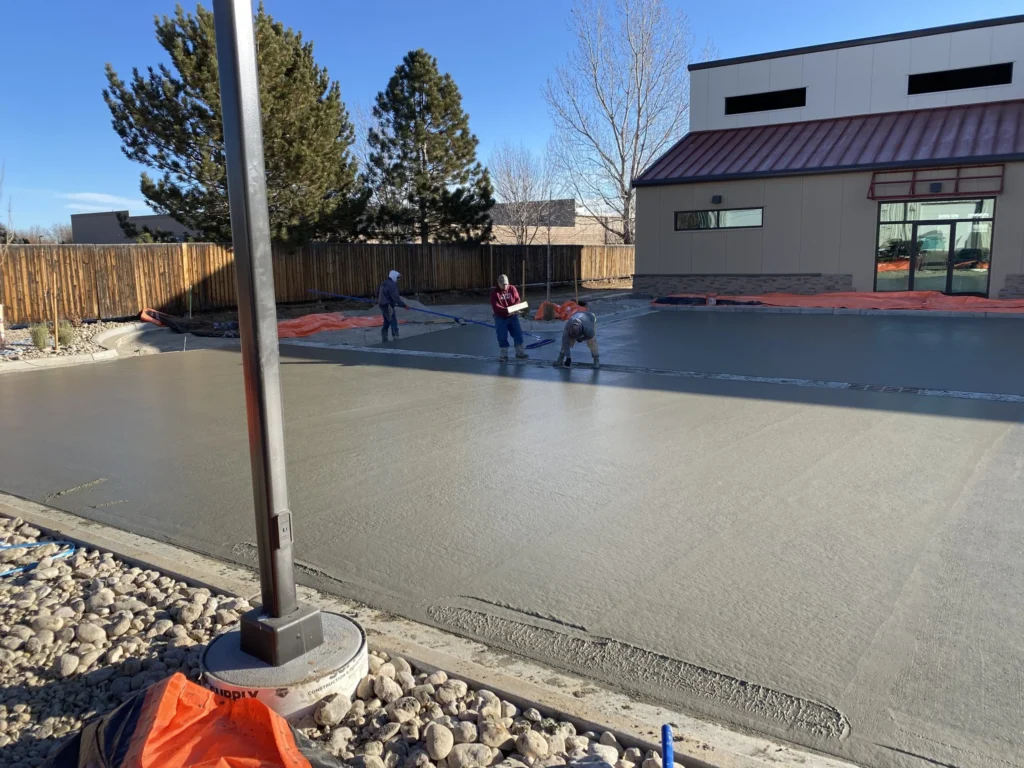
Parking Lot Concrete Installation & Repair in Edmonton: Common Problems and Solutions
Most parking lot problems look like “concrete issues,” but they often start underneath the slab. When subgrade and base aren’t prepared correctly, water collects and saturates the supporting layers. Then freezing temperatures expand that moisture, causing movement, cracking, and surface scaling over time. Freeze-thaw cycling is widely recognized as one of the most damaging actions for concrete, and deterioration often shows up as surface scaling and internal cracking.
In practical terms, Edmonton properties usually run into a few repeat offenders:
- Poor drainage: ponding water becomes ice and pushes water into joints and microcracks.
- Weak base or inadequate compaction: leads to settlement, rocking slabs, and broken edges.
- Joint problems: missing, poorly placed, or unsealed joints cause random cracking and spalling.
- Durability gaps in the mix design: exterior slabs exposed to freezing and de-icing salts need durability-focused requirements (not just “strong concrete”).
Common Signs You Need Parking Lot Concrete Repair (or Replacement)
If you’re deciding whether to schedule parking lot concrete installation & repair in Edmonton, these are the most common red flags we see on commercial sites:
- Cracks that are widening or spreading (especially near entrances, corners, and turning areas).
- Surface scaling or spalling—flaking, pitting, or rough patches that worsen after winter.
- Standing water after rain (ponding) or recurring ice sheets in the same areas.
- Uneven slabs, trip edges, or settlement that create liability and accessibility issues.
- Failed joints (crumbling edges, open gaps, debris-filled seams) allowing water intrusion.
Real-world example: A small retail strip in south Edmonton had “minor” corner cracks for two years. After a winter with heavier salting, the corners began spalling and the slab edges broke off under snowplow impact. The fix wasn’t just patching the corners—it required correcting drainage flow and rebuilding the base in the affected bays so the repair would actually last.
Concrete vs. Asphalt Parking Lots in Edmonton
Both can work, but they behave differently in Edmonton’s climate and traffic patterns. Concrete typically costs more upfront, yet often delivers strong long-term value—especially at entrances, loading approaches, and high-turn areas where rutting and softening can be issues for asphalt in warm months.
| Factor | Concrete Parking Lot | Asphalt Parking Lot |
|---|---|---|
| Durability in high-traffic turning zones | Excellent when base, joints, and mix are right | Can rut or shove over time |
| Freeze-thaw & de-icing salt exposure | Performs well with air entrainment, low permeability, good curing | Typically needs periodic sealing/maintenance |
| Maintenance style | Joints + occasional sealing/repairs | Crack fill + sealcoat + resurfacing cycles |
| Best use cases | Commercial entrances, loading zones, long-life lots | Lower-load lots, budget-driven projects |
For many Edmonton properties, a hybrid approach also works well: concrete at entrances, ramps, garbage enclosures, and loading approaches—paired with asphalt in lower-stress areas. The “best” choice depends on traffic loads, expected lifespan, and how disruptive closures would be for your business.
Parking Lot Concrete Services in Edmonton
At Edmonton Concrete Services, we support both new builds and fixes for existing sites. The goal isn’t just to “make it look better”—it’s to choose the right scope so your repairs hold up through winters and busy seasons.
New Concrete Parking Lot Installation (Commercial & Industrial)
New installation is ideal when you’re building a new facility, expanding a lot, or replacing an older surface that’s beyond economical repair. A proper installation includes base preparation, reinforcement strategy, joint layout, and a curing plan that protects early strength gain.
Where new installation shines: warehouse lots, high-traffic retail, multi-tenant office parking, and any site where long-term performance and appearance matter.
Concrete Parking Lot Repair (Targeted Fixes)
Repairs are the right move when the slab is mostly stable but has localized issues—like cracks, spalls, or joint damage. Effective repair starts by diagnosing the cause (water, base movement, joint failure), then selecting a method that matches the problem.
- Crack repairs that reduce water entry and slow damage progression.
- Spall repairs to restore edges and remove unsafe deteriorated areas.
- Joint repairs to protect slab edges and limit freeze-thaw intrusion.
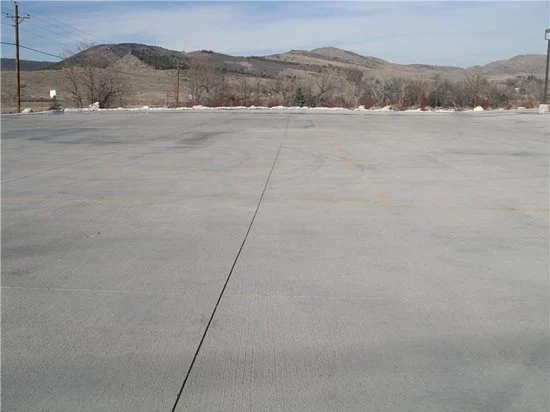
Resurfacing & Overlays (When the Base Is Still Sound)
Resurfacing can be a smart option when the slab is structurally sound but has cosmetic wear, minor scaling, or surface roughness. It’s not a cure for settlement, widespread movement, or chronic ponding—those must be fixed first.
Rule of thumb: If water collects and freezes in the same spots every winter, you’ll want to correct drainage and/or base issues before investing in an overlay.
Partial or Full Slab Replacement (When Repair Won’t Last)
Replacement becomes the better investment when you see repeated failure in the same areas, large settlement, rocking slabs, or widespread scaling. For busy properties, we often plan phased replacement to keep entrances open and maintain safe pedestrian routing.
Real-world example: A medical office lot near a main arterial couldn’t fully close without disrupting patients. We replaced bays in phases (weekends and off-peak windows), keeping accessible parking active and maintaining safe walk paths during cure time.
Curbs, Ramps, Sidewalks, and Parking Stops
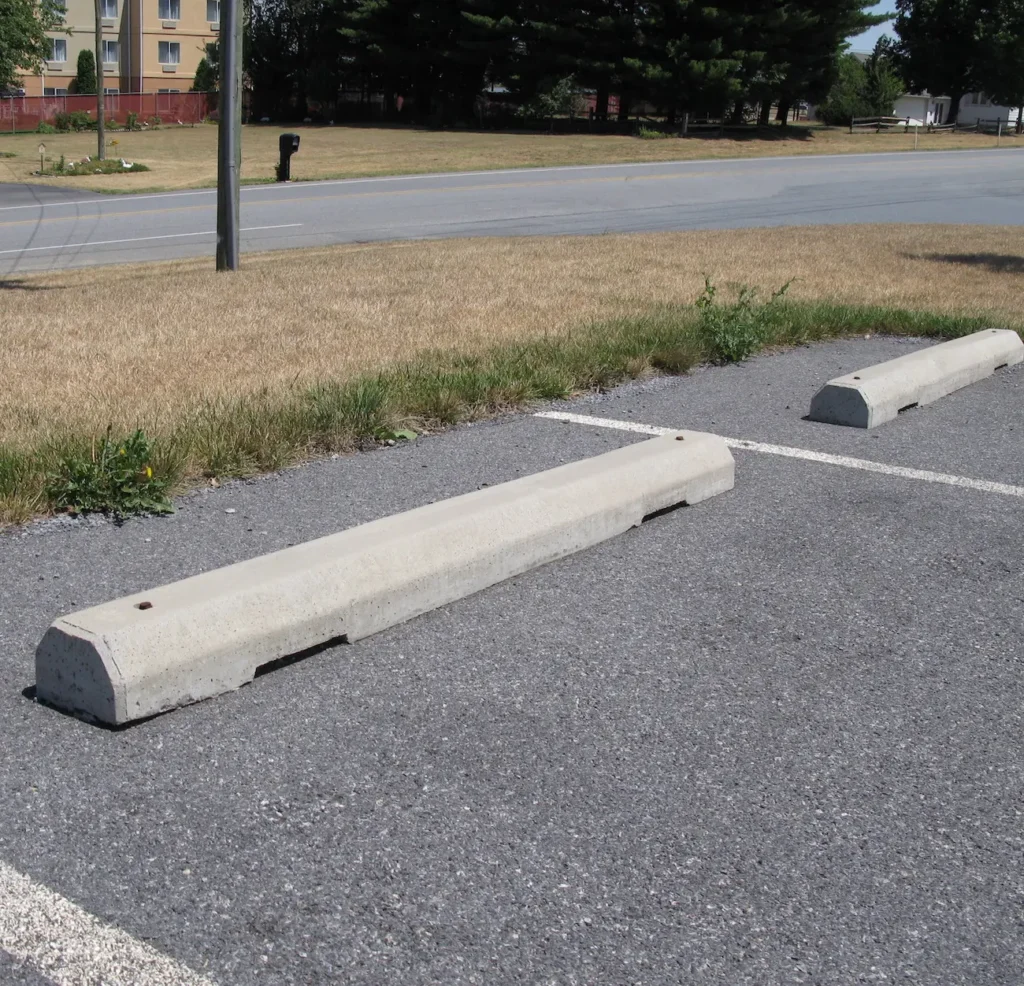
Parking lots function as a system. Curbs guide traffic and protect landscaping, ramps support accessibility routes, and parking stops help reduce vehicle overrun. If you’re already investing in parking lot concrete installation & repair in Edmonton, bundling these elements can improve both safety and appearance—often with less disruption than separate projects.
The Edmonton-Proof Build: What a Quality Concrete Parking Lot Should Include
A durable parking lot is not “just thicker concrete.” It’s the combination of a stable base, planned joints, drainage that moves water away, and a mix/cure approach designed for freeze-thaw exposure and de-icing salts. Concrete industry guidance emphasizes air entrainment for concrete exposed to freezing-and-thawing cycles, and durability requirements depend on exposure severity.
Subgrade Prep & Base Compaction (Where Long Life Really Begins)
If we had to pick one place where parking lots “win or lose,” it’s the base. Without proper excavation, suitable base material, and compaction in layers, even a great slab can crack and settle. A quality approach typically includes:
- Removing unsuitable or soft soils (especially in wet or disturbed areas).
- Building up a stable granular base in compacted lifts.
- Paying special attention to entrances, turning radii, and loading approaches.
Drainage Design That Prevents Ponding and Ice
Water is the enemy in Edmonton winters. When water sits on the surface or runs into joints, it increases saturation—making freeze-thaw damage more likely. The severity of frost damage is strongly tied to saturation levels in porous materials like concrete.
Practical drainage solutions may include corrected slopes, proper tie-ins at catch basins, and thoughtful grading so meltwater doesn’t refreeze into sheets at pedestrian crossings.
Concrete Mix Choices for Freeze-Thaw & De-Icing Salt Durability
Strength matters, but permeability and freeze-thaw durability matter just as much for exterior flatwork. Durable exterior concrete commonly relies on:
- Air entrainment to improve resistance to freezing-and-thawing and salt exposure.
- Good curing to develop a dense surface that resists scaling.
- Controlled water-to-cementitious ratio to reduce permeability (helps keep water out).
Expert note: Cold-weather concrete requires planning. ACI’s cold weather concreting guidance is built around maintaining conditions that let concrete gain strength and durability rather than freezing early.
Reinforcement Strategy: Rebar vs Wire Mesh vs Fiber
Reinforcement doesn’t “stop” concrete from cracking—concrete will crack. The goal is to control crack width, support load transfer, and keep slab panels performing as intended.
| Option | Best For | Watch Outs |
|---|---|---|
| Rebar | Heavier-duty zones, edges, entrances, load paths | Must be placed correctly (not sitting on the base) |
| Wire mesh | General slab reinforcement for many commercial lots | Needs proper support/chairs to be effective |
| Fiber | Helping with plastic shrinkage cracking and surface performance | Not a replacement for structural steel in heavy-load designs |
Thickness Planning by Use Case (Cars vs Mixed Traffic vs Heavy Loads)
Thickness should match how the lot is used. A light-duty customer parking area differs from a loading approach where trucks turn and brake. The most common premature failures happen where the design didn’t account for concentrated loads—like dumpster enclosures, delivery lanes, and tight turning radii.
Joints Done Right: Control Cracking and Protect Slab Edges
Joints are not optional details—they’re how you “tell” concrete where to crack so it doesn’t crack randomly. A good joint plan includes proper spacing, clean saw cuts at the right time, and (where appropriate) sealing that keeps water and debris out of the joint.
If your lot has random cracking everywhere, it’s often a sign of joint layout issues, timing issues, or base movement—sometimes all three.
Finishing & Curing: The Difference Between “Looks Good Today” and “Lasts for Years”
Finishing affects traction and durability, while curing is what helps the surface become dense and resistant to early wear. In Edmonton, curing and protection planning becomes even more important when temperatures swing or work is scheduled near shoulder seasons. ACI’s cold weather concreting guidance emphasizes methods and planning to protect concrete during placement and early-age strength development.
Next Steps: Get a Practical Plan for Your Edmonton Parking Lot
If you’re dealing with cracks, scaling, ponding, or uneven slabs, the fastest way to stop repeat damage is to start with a simple site assessment: identify drainage paths, confirm base stability in the worst areas, and match the solution to the cause—not just the symptom.
CTA: If you want a clear scope and a disruption-minimizing schedule, contact EdmontonConcreteServices.ca to request a quote for parking lot concrete installation & repair in Edmonton. We’ll help you choose the most cost-effective option—targeted repair, resurfacing where suitable, or phased replacement—based on how your property actually operates.
Parking Lot Concrete Installation Process in Edmonton (Step-by-Step)
A successful parking lot concrete installation & repair in Edmonton comes down to planning the job like a system: traffic flow, drainage, base preparation, reinforcement, joints, curing, and a reopening plan that matches how your business operates. Below is the same practical workflow we use on commercial sites—written in plain language so you can understand what “good” looks like before you hire anyone.
Step 1: Site Review, Measurements & a Phasing Plan (So You Can Stay Open)
We start by walking the site with you (or your property manager) to confirm:
- Traffic patterns: where cars turn, brake, and queue (high-stress zones).
- Delivery routes: loading bays, garbage enclosures, and heavy vehicle paths.
- Drainage: where water is currently ponding and where it should exit the lot.
- Access priorities: entrances, emergency access lanes, and pedestrian routes.
Real-world example: For a busy restaurant lot in Edmonton, we can phase work so one entrance stays active while the other cures, then swap—reducing lost sales and avoiding full closures.
Step 2: Demolition & Excavation (Remove What’s Failing)
If we’re replacing sections, demolition isn’t just “break it out and haul it away.” We also identify why the slab failed—soft subgrade, poor drainage, inadequate base, or joint issues—so the replacement doesn’t repeat the same problem next winter.
Step 3: Subgrade & Base Preparation (The Hidden Layer That Controls Cracking)
Most “concrete problems” are actually base problems. A properly prepared base helps prevent settlement, rocking slabs, and broken edges. This typically includes:
- Removing unsuitable material (especially wet/organic soils).
- Building a stable granular base in compacted layers.
- Extra attention to entrances, turning radii, and loading approaches.
If water is allowed to sit in the supporting layers, freeze-thaw cycles can drive movement and damage over time—one reason base and drainage are non-negotiable in Edmonton.
Step 4: Formwork, Reinforcement & Embedded Items
This is where the project starts looking like a parking lot. We install forms to define edges and elevations, place reinforcement to match the design intent, and coordinate any embedded items (like catch basin frames or protected utility areas).
Step 5: Concrete Placement, Finishing & Traction
Commercial parking lots need a finish that’s durable and safe for pedestrians. In most cases, a broom finish provides reliable traction in wet conditions and during shoulder seasons when surfaces can be slick.
Step 6: Jointing (Saw Cuts) at the Right Time
Joints are how you control where concrete cracks. The timing matters: cut too early and edges can ravel; cut too late and random cracking may already have started. ACI guidance for early saw-cutting notes that timing can be just a few hours after placement depending on conditions, with the goal of preventing random cracking while avoiding excessive raveling.
Step 7: Curing & Protection (Especially Important in Edmonton)
Curing is what turns “fresh concrete” into durable concrete. In Edmonton, protection planning is critical when temperatures dip. ACI’s cold weather concreting guidance emphasizes preventing early-age freezing and maintaining appropriate temperatures so concrete can develop strength and durability.
“The objectives of cold weather concreting practices are to prevent damage to concrete due to early-age freezing.”
Step 8: Reopening, Striping & Final Walkthrough
Reopening too early is one of the fastest ways to damage edges and surfaces—especially if heavier vehicles arrive before the slab has gained enough strength. As a general rule of thumb, many industry guides recommend waiting about 7 days before driving on newly poured concrete, and longer for heavier commercial vehicles.
Once cure targets are met, we coordinate striping, parking stops, and any finishing details, then do a final walkthrough to confirm slopes, drainage behavior, and safety.
Repair Options: Patch, Resurface, or Replace?
When you’re comparing parking lot concrete repair in Edmonton options, the best decision is the one that fixes the cause—not just the visible damage. Below is a practical breakdown.
Concrete Crack Repair: What Works (and What Doesn’t)
Cracks happen in concrete. The goal is to limit water entry, reduce freeze-thaw expansion inside the slab, and stop cracks from growing into wider failures.
- Good fit: stable cracks that aren’t showing major vertical movement.
- Not a good fit: cracks caused by settlement or base failure (those need base correction and possibly slab replacement).
Tip for property managers: If a crack is creating a trip edge (one side higher than the other), it’s not just “a crack”—it’s movement, and patch-only repairs usually don’t hold long-term.
Spalling & Surface Scaling Repair (Common After Winter)
Scaling is the flaking/peeling of hardened concrete surfaces commonly linked to freezing and thawing exposure. If your lot is scaling, the repair approach should include proper removal, surface preparation, and materials compatible with freeze-thaw exposure.
Why it matters: Surface scaling isn’t only cosmetic—it can reduce traction, look unprofessional, and accelerate deterioration if water continues to enter.
Joint Repair & Joint Sealing (Often the Most Cost-Effective “Hidden Fix”)
Joints are supposed to protect slab panels—not destroy them. When joints fill with debris and water, edges spall and panels break down faster. Repairing and maintaining joints can be one of the smartest ways to slow damage across the entire lot.
Resurfacing / Overlay (Only When the Base Is Sound)
Resurfacing can restore appearance and traction when the slab is structurally stable but has surface wear. It’s not the answer for chronic ponding, settlement, or rocking slabs. If the underlying base is moving, the overlay will move too—and crack again.
Partial or Full Slab Replacement (When Repairs Won’t Last)
Replacement is typically the best investment when:
- Slabs are settling or rocking.
- Ponding is severe and tied to elevations/base problems.
- Scaling/spalling is widespread.
- High-load zones (entrances/turns/loading) repeatedly fail.
Quick Comparison: Repair vs Resurface vs Replace
| Option | Best For | Typical Downtime | When It’s a Bad Idea |
|---|---|---|---|
| Targeted Repair | Localized cracks, joints, spalls | Low to moderate | Base failure or recurring settlement |
| Resurfacing / Overlay | Cosmetic wear on stable slabs | Moderate | Ponding, movement, widespread structural cracking |
| Replacement (Partial/Full) | Movement, severe deterioration, heavy-load failures | Moderate to higher (can be phased) | When the lot is stable and only needs minor fixes |
Cost of Parking Lot Concrete Installation & Repair in Edmonton
Concrete parking lot pricing depends less on “concrete” and more on site conditions. If you want reliable budgeting, focus on the cost drivers below—because they explain why two lots with the same square footage can have very different quotes.
Key Factors That Affect Price
- Square footage + slab thickness: thicker slabs and reinforced zones increase material and labor.
- Base condition: poor soils, extra excavation, and thicker granular base add cost (but protect longevity).
- Drainage work: correcting slopes, adding/adjusting catch basins, and tie-ins can be significant.
- Reinforcement strategy: rebar vs mesh vs fiber—designed for your loads.
- Demolition & disposal: breaking out old slabs, hauling, and disposal logistics.
- Access constraints: tight sites may require different staging and sequencing.
- Seasonality & protection: cold-weather protection planning can add labor/material requirements.
How to Budget Smarter: Lifecycle Value vs Lowest Bid
The lowest bid often skips the parts you can’t easily see: compaction, base thickness, joint planning, and curing/protection. If you want a lot that lasts, ask every contractor to clearly state:
- Base build-up and compaction approach
- Concrete mix durability considerations for freeze-thaw exposure
- Joint layout plan + saw-cut timing
- Curing and (if needed) cold-weather protection plan
Typical Project Timelines (Small Retail vs Larger Commercial)
Most projects break down into three phases:
- Planning & scheduling: site review, scope confirmation, traffic/closure plan.
- Work phase: demo/excavation/base/formwork/pour/joints.
- Cure + reopen strategy: coordinating access so vehicles don’t return too early (often around a week for standard vehicle traffic as a rule of thumb).
Edmonton Weather & Seasonality: Best Time to Pour Concrete
If you want maximum predictability, warmer months are simpler. But commercial properties don’t always have that luxury—especially when damage becomes a safety issue. The key is planning the right protection measures when temperatures drop.
Warm-Season Advantages
- More predictable curing conditions
- Fewer protection requirements
- Easier scheduling for striping and finishing work
Cold-Weather Concrete Considerations (If Work Must Happen)
Cold-weather concreting is not “impossible,” but it must be managed carefully. ACI guidance emphasizes preventing early-age freezing and maintaining appropriate temperatures long enough for the concrete to develop required strength and durability.
What that means for you as an owner/manager: you should expect a contractor to explain how they will protect concrete immediately after placement (especially edges and corners) and how they’ll verify the concrete is ready before reopening heavy traffic.
Freeze-Thaw Protection: Sealers, Joints & Drainage
Freeze-thaw damage is heavily influenced by moisture—so controlling water is the strategy:
- Drain water away (fix ponding and low spots).
- Protect joints so they don’t become water channels into the slab.
- Maintain surfaces so scaling doesn’t open pathways for more water.
Industry guidance explains scaling as surface flaking/peeling linked to freeze-thaw exposure.
Maintenance Plan: Make Your Concrete Parking Lot Last Longer
Maintenance isn’t about making your lot perfect—it’s about preventing small issues from turning into full slab replacement. A basic plan can significantly reduce long-term costs.
Simple Inspection Checklist (Spring + Fall)
- Cracks: note new cracks and measure any that are widening.
- Joints: look for crumbling edges, open gaps, and debris-packed seams.
- Ponding: after rain, identify standing water areas (future ice sheets).
- Trip hazards: any vertical movement needs attention for liability and accessibility.
- Surface scaling: track if the surface is flaking/peeling after winter.
Snow Clearing & De-Icing Do’s and Don’ts
- Do: keep plow blades adjusted to reduce edge impacts at joints and corners.
- Do: address ponding water quickly—ice sheets are a predictable repeat hazard.
- Don’t: ignore joint damage—water intrusion accelerates freeze-thaw deterioration.
When to Consider Sealing or Resealing
Sealers can help reduce moisture intrusion and staining in some applications, but timing and product selection matter—especially if the slab is new. Your contractor should recommend a plan that matches your traffic and exposure level rather than a one-size-fits-all approach.
Choosing the Right Parking Lot Concrete Contractor in Edmonton
Hiring the right team is about more than a smooth finish. For parking lot concrete installation & repair in Edmonton, you want a contractor who understands base prep, joints, curing, drainage, and business scheduling.
Questions to Ask Before You Hire
- What is your base preparation plan, and how will compaction be handled?
- How are you addressing drainage to prevent ponding and ice?
- What’s your joint layout, and when will you saw-cut? (Timing matters.)
- What’s your curing and protection plan—especially if temperatures drop?
- How will you phase the job so customers, tenants, or deliveries can still function?
Red Flags That Often Lead to Early Failure
- Vague answers about base thickness, compaction, and drainage
- No clear jointing plan (or “we’ll decide on pour day”)
- Pressure to reopen traffic immediately without a curing strategy
- “We always do it this way” with no explanation tied to Edmonton conditions
Why EdmontonConcreteServices.ca
We combine professional crews and modern equipment with practical planning for commercial sites—so you get a parking lot built for Edmonton’s realities: freeze-thaw exposure, de-icing, heavy turning zones, and tight timelines. Whether you need a full installation, targeted repairs, or phased replacement, our focus is long-term durability and clear communication from quote to closeout.
Real-World Edmonton Scenarios (What the Right Plan Looks Like)
Retail Plaza: Minimize Closures with Phased Slab Replacement
For retail, downtime is money. A phased plan typically replaces bays in sections, keeps pedestrian routes clear, maintains accessible parking options, and schedules the noisiest work at off-peak times.
Warehouse / Industrial: Reinforce Entrances and Turning Radii
Heavy loads rarely break the middle of a slab first—they destroy corners, edges, and turning zones. Industrial lots benefit most from reinforced approaches, thicker sections where needed, and a joint plan that supports load transfer.
Small Business Lot: Repair vs Resurface Decision
If the slab is stable and the issue is mostly surface wear or minor scaling, resurfacing may improve appearance and traction. But if the lot has ponding, settlement, or repeated cracking, replacement of affected areas is often the most cost-effective long-term choice.
FAQ: Parking Lot Concrete Installation & Repair Edmonton
How long before vehicles can drive on new concrete?
A common rule of thumb is to wait about 7 days before driving on newly poured concrete, and longer for heavier commercial vehicles—so the slab can build sufficient strength.
Is resurfacing strong enough for Edmonton winters?
It can be—if the base and slab are structurally sound and drainage is correct. Resurfacing is not a fix for settlement, rocking slabs, or chronic ponding that turns into ice sheets.
What causes concrete parking lots to crack?
Concrete cracks for many reasons, but the most common are shrinkage, jointing issues, base movement, and water-related freeze-thaw stress. Proper joint planning and base preparation are key to controlling cracking instead of letting it happen randomly.
Can you repair sections without replacing the whole lot?
Yes. Many Edmonton properties do best with targeted repairs or phased replacement—especially when you need to keep entrances open and maintain safe pedestrian routes.
How do you fix ponding water on a concrete lot?
Ponding is usually an elevation/drainage issue. Fixes may include correcting slopes, rebuilding low sections properly, and improve
If you’re planning parking lot concrete installation & repair in Edmonton, working with an experienced local contractor ensures long-term durability and minimal disruption to your site.
