
Concrete might look solid and unchanging once it’s poured, but in reality, it’s constantly reacting to its environment. In Edmonton, that environment is one of the harshest in the country. From deep winter freezes to rapid spring thaws and hot, dry summers, Edmonton’s weather puts concrete under year-round stress.
If concrete isn’t designed, poured, and cured specifically for these conditions, cracks, scaling, and premature failure are almost guaranteed.
This guide explains how Edmonton weather affects concrete, why problems happen, and what professional contractors do differently to make concrete last decades instead of years.
Whether you’re planning a driveway, patio, sidewalk, or cribbing, understanding the climate is the first step to protecting your investment.
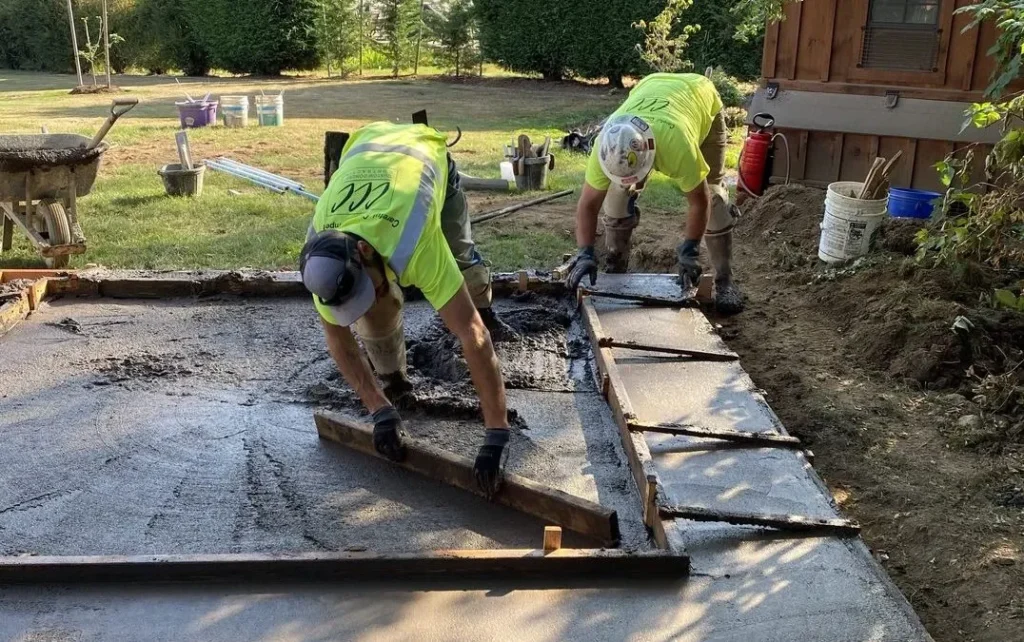
Understanding Edmonton’s Climate Extremes
Edmonton isn’t just “cold in winter and warm in summer.” What makes it especially challenging for concrete is the speed and frequency of temperature changes.
Concrete expands, contracts, absorbs moisture, and releases it—all of which are intensified by Edmonton’s climate patterns.
Edmonton Temperature Ranges Explained
Edmonton regularly sees winter temperatures below -20°C, with cold snaps dropping even lower.
In contrast, summer temperatures can climb above +30°C.
That creates a massive annual temperature swing of more than 50 degrees.
Concrete responds to these changes by expanding in heat and contracting in cold.
While small movements are normal, repeated cycles cause internal stress—especially when moisture is involved.
Over time, this stress shows up as cracking, surface flaking, and joint separation.
Freeze–Thaw Cycles in Edmonton
Freeze–thaw cycles are one of the biggest reasons concrete fails in Edmonton.
A freeze–thaw cycle happens when temperatures move above and below 0°C, allowing water to freeze and thaw repeatedly inside the concrete.
Edmonton can experience dozens of these cycles every year, especially during spring and fall.
Each time water freezes, it expands by about 9%.
Inside concrete, that expansion creates pressure.
If the concrete isn’t designed to relieve that pressure, it slowly breaks down from the inside out.
- More freeze–thaw cycles = faster surface deterioration
- Moisture exposure accelerates damage
- Improper concrete mixes fail far sooner
Snow, Ice, and De-Icing Chemicals
Snow and ice alone aren’t the only problem.
De-icing salts used on driveways, sidewalks, and walkways make things worse.
These chemicals lower the freezing point of water, causing more frequent freeze–thaw cycles at the concrete surface.
Over time, salts penetrate the concrete, break down the cement paste, and lead to surface scaling.
This is why concrete that looks fine for the first year or two can suddenly start flaking badly by year three or four.
How Cold Weather Affects Concrete
Cold temperatures don’t just affect old concrete—they are especially dangerous for freshly poured concrete.
Without the right precautions, winter and shoulder-season pours can permanently weaken the slab before it ever reaches full strength.
Concrete Curing Below 5°C
Concrete doesn’t “dry”—it cures through a chemical reaction called hydration.
This reaction slows dramatically as temperatures drop.
Below 5°C, curing becomes inefficient, and near freezing, it can nearly stop altogether.
When curing slows:
- Concrete gains strength more slowly
- Final compressive strength can be reduced
- Durability against freeze–thaw is compromised
According to industry research, concrete cured at low temperatures can lose up to 20–40% of its potential strength if not properly protected during early curing.
What Happens When Concrete Freezes Too Early
Fresh concrete is especially vulnerable in its first 24–48 hours.
If it freezes before reaching adequate strength (about 3.5 MPa), ice crystals form inside the mix.
These crystals disrupt the cement structure and create micro-cracks that never fully heal.
Even if the concrete appears hard on the surface later, internal damage may already be done.
This leads to:
- Reduced long-term strength
- Increased cracking over time
- Early surface scaling
Winter Pouring Risks vs Professional Mitigation
Pouring concrete in Edmonton during colder months isn’t impossible—but it requires experience, planning, and the right equipment.
Professional contractors adjust every step of the process to protect the concrete.
Typical cold-weather mitigation strategies include:
- Heating aggregates and mixing water
- Using cold-weather admixtures to accelerate curing
- Insulating forms and covering slabs with thermal blankets
- Monitoring internal concrete temperatures during curing
Without these measures, winter concrete pours often fail prematurely.
This is one reason experienced Edmonton contractors stress that weather-specific concrete practices are not optional—they’re essential.
As the American Concrete Institute notes, “Concrete exposed to freezing temperatures before adequate strength development may suffer permanent loss of durability.”
That reality is magnified in Edmonton’s climate.
Knowing the best seasons for pouring concrete in Edmonton helps prevent early freeze damage and long-term durability issues.
Up next: we’ll break down how freeze–thaw cycles physically damage concrete over time, why air-entrained concrete is critical in Edmonton, and how summer heat creates a different—but equally serious—set of challenges.
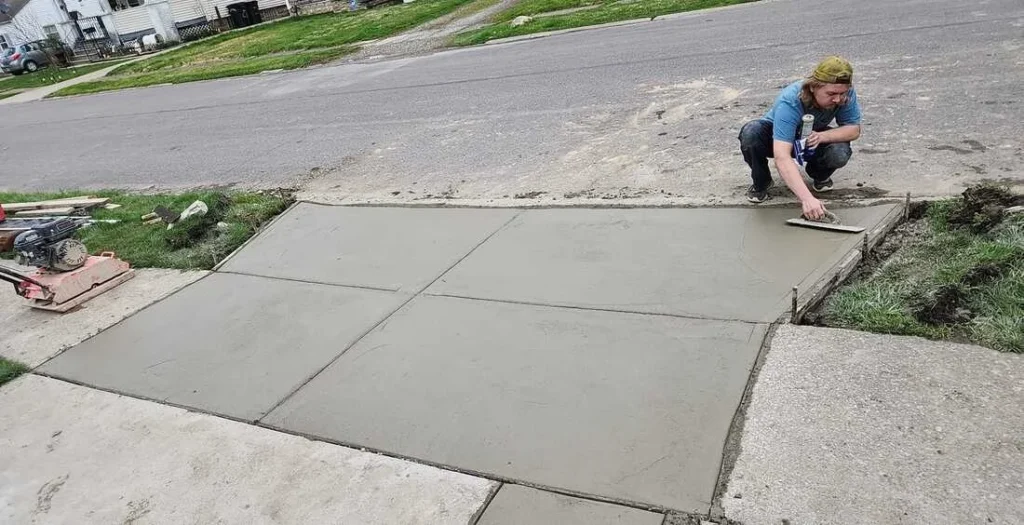
Freeze–Thaw Damage and Concrete Deterioration
Once concrete has cured, Edmonton’s climate continues to test it year after year.
The most destructive force at play is still the freeze–thaw cycle, which slowly weakens concrete from the inside.
Understanding how this damage happens helps explain why some slabs last decades while others fail far too soon.
How Water Enters Concrete
Concrete is strong, but it is not waterproof.
Even well-finished concrete contains microscopic pores that allow moisture to enter.
In Edmonton, this moisture comes from snowmelt, rain, and ground moisture beneath slabs.
Common entry points include:
- Capillary pores within the concrete matrix
- Hairline shrinkage cracks
- Edges and joints where water pools
Once water is inside the concrete, temperature swings turn it into a destructive force.
Expansion, Pressure, and Surface Failure
When trapped water freezes, it expands by roughly 9%.
If there’s no internal space to absorb that expansion, pressure builds.
Over repeated freeze–thaw cycles, this pressure causes:
- Surface scaling and flaking
- Pop-outs and pitting
- Progressive cracking
This is why concrete in Edmonton often looks fine for the first few years, then suddenly begins to deteriorate.
The damage builds internally long before it becomes visible.
Why Air-Entrained Concrete Is Critical in Edmonton
Air-entrained concrete is specifically designed to survive freeze–thaw environments like Edmonton.
It contains billions of microscopic air bubbles that act as pressure relief zones when water freezes.
These tiny air pockets:
- Give expanding ice somewhere to go
- Reduce internal stress on the concrete
- Greatly improve long-term durability
In Alberta’s climate, non-air-entrained concrete exposed to moisture will almost always fail prematurely.
This is why experienced local contractors consider air entrainment non-negotiable for exterior flatwork.
Managing water runoff and drainage around slabs is one of the most effective ways to protect concrete from Edmonton’s climate.
How Summer Heat Affects Concrete in Edmonton
While winter causes the most visible damage, Edmonton’s summers create their own set of concrete problems.
Heat, wind, and low humidity can all interfere with proper curing if not managed correctly.
Rapid Evaporation and Surface Cracking
On hot, dry days, moisture can evaporate from fresh concrete too quickly.
When this happens, the surface shrinks faster than the concrete beneath it, leading to plastic shrinkage cracking.
These cracks often appear within hours of finishing and can:
- Reduce surface durability
- Create entry points for moisture
- Become more visible over time
Thermal Expansion and Control Joints
Concrete expands in heat and contracts in cold.
In Edmonton, where temperature swings are extreme, this movement must be planned for.
That’s where control joints come in.
Properly spaced control joints:
- Allow concrete to move without cracking randomly
- Control where cracks occur
- Improve long-term appearance
Improper joint spacing is one of the most common causes of unsightly cracking in Edmonton driveways and sidewalks.
Heat vs Strength Development
High temperatures speed up curing—but faster isn’t always better.
Rapid curing can reduce ultimate strength and increase surface weakness if moisture is lost too quickly.
Professional crews counteract this by using curing compounds, surface shading, or controlled watering to slow evaporation and promote proper strength development.
Seasonal Impacts on Common Concrete Applications
Concrete Driveways in Edmonton
Driveways face the harshest combination of stress:
vehicle loads, freeze–thaw cycles, and de-icing salts.
In Edmonton, a durable driveway requires proper base preparation, air-entrained concrete, and correct slope for drainage.
Sidewalks, Patios, and Walkways
These surfaces are especially vulnerable to surface scaling.
Poor finishing practices—like over-troweling—can trap water at the surface and lead to early flaking.
YEG Cribbing and Foundation Edges
Cribbing and exposed foundation edges are directly affected by soil movement and frost heave.
Without proper drainage and frost protection, movement below the slab can lead to cracking and displacement.
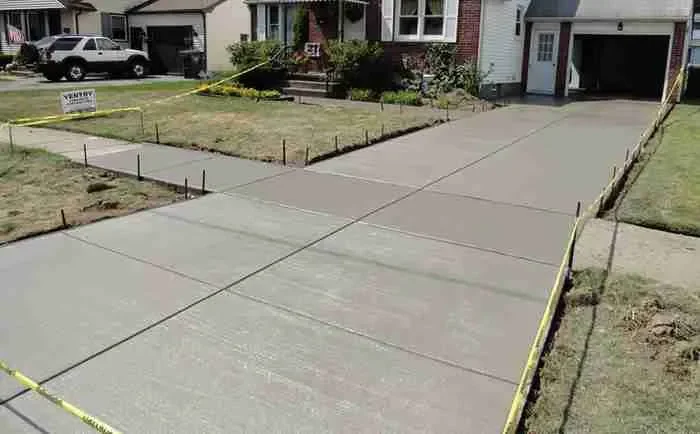
Best Concrete Practices for Edmonton’s Climate
Mix Design Adjustments for Edmonton Weather
Concrete used in Edmonton is not the same as concrete used in mild climates.
Professional mix designs typically include:
- Air entrainment for freeze–thaw resistance
- Lower water-to-cement ratios for strength
- Durable aggregates suited to Alberta conditions
Proper Timing and Seasonal Planning
Late spring through early fall is ideal for most flatwork.
However, with the right precautions, experienced crews can safely pour during shoulder seasons as well.
Knowing when to delay a pour is just as important as knowing how to proceed.
Professional Finishing and Curing Methods
Curing is where long-term durability is won or lost.
Methods such as curing compounds, wet curing, and insulated blankets are selected based on season and weather forecast—not guesswork.
Common Concrete Problems in Edmonton (And Why They Happen)
Cracking – What’s Normal vs What’s Not
Hairline shrinkage cracks are normal.
Wide, uneven, or rapidly spreading cracks often indicate deeper structural or base issues that should be addressed early.
Scaling and Surface Flaking
Most scaling is caused by early exposure to de-icing salts or poor finishing techniques.
Once scaling begins, damage tends to accelerate with each winter.
Heaving and Settlement Issues
Frost heave and poor compaction beneath slabs can lift or sink concrete.
Proper base preparation and drainage are essential in Edmonton’s frost-prone soils.
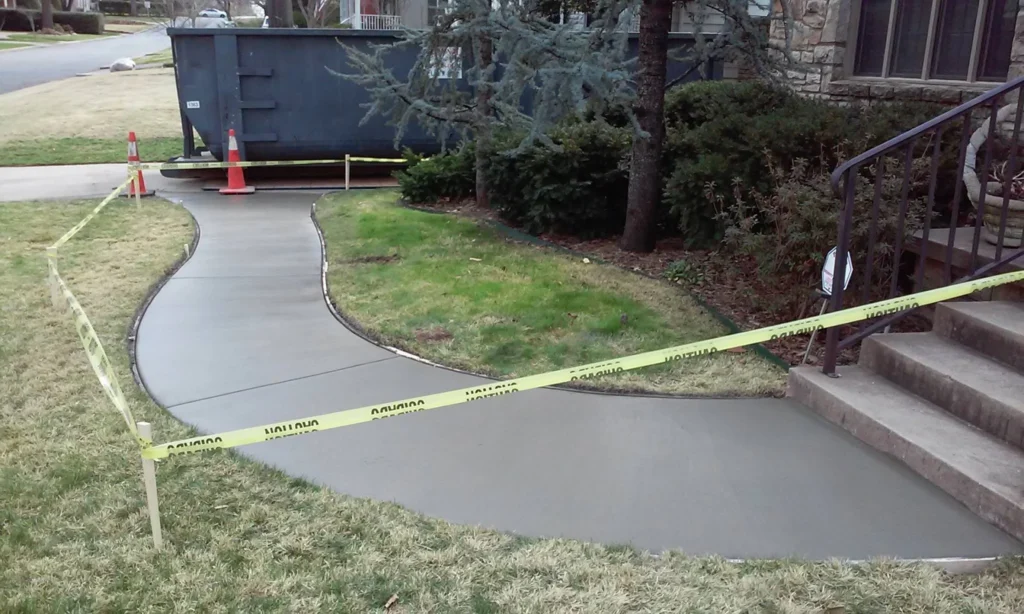
Frequently Asked Questions
Can you pour concrete in winter in Edmonton?
Yes—but only with proper cold-weather procedures, heated materials, and insulation.
Without these, long-term durability is compromised.
How long does concrete last in Edmonton weather?
Properly designed and installed concrete can last 30–40 years or more.
Poorly installed concrete may fail in under 10 years.
What concrete mix is best for freeze–thaw climates?
Air-entrained concrete with a low water–cement ratio is essential for Edmonton conditions.
Does sealing concrete help in Edmonton?
Yes. Sealing helps reduce moisture and salt penetration, extending surface life when applied correctly.
Key Takeaways: Building Concrete That Survives Edmonton Weather
Edmonton’s climate is unforgiving, but concrete failures are not inevitable.
With climate-specific mix designs, proper timing, and professional installation, concrete can thrive—even under extreme conditions.
Understanding how Edmonton weather affects concrete empowers homeowners and builders to make better decisions, avoid costly repairs, and invest in long-term durability.
Ready to Build Concrete That Lasts?
If you’re planning a driveway, patio, sidewalk, or cribbing project in Edmonton, working with a contractor who understands local weather isn’t a bonus—it’s essential.
A professional approach ensures your concrete is designed, poured, and cured specifically for Edmonton’s climate.
Contact a local Edmonton concrete professional to discuss climate-specific solutions and build with confidence.
