
Planning a patio upgrade in Mount Royal or a new build in McKenzie Towne and stuck between concrete and pavers? This is one of Calgary’s most common landscaping dilemmas. The right choice affects your budget, weekend maintenance, and how well your patio handles our famous chinooks and deep freezes. Let’s cut through the confusion and compare these two heavyweights side-by-side.
Your decision impacts everything from upfront cost in Calgary to long-term curb appeal. As your local concrete authority, EdmontonConcrete helps homeowners and builders across Alberta make informed choices. We’ll break down the pros, cons, and local realities of each option so you can invest with confidence.

What Are Concrete Patios?
A concrete patio is created by pouring a wet mixture of cement, aggregates, and water into forms on a prepared site. Once cured, it becomes a solid, monolithic slab. Modern techniques, like stamping and coloring, allow it to mimic more expensive materials while retaining its inherent strength. It’s a popular, versatile foundation for outdoor living spaces throughout communities like Brentwood and beyond.
The installation is a continuous process, resulting in a seamless surface. This uniformity is a key characteristic, offering a sleek, modern look that many Calgary homeowners appreciate for its simplicity. The final product’s performance hinges heavily on the quality of the initial mix design and the skill of the installation crew.
Pros of Concrete Patios
Concrete’s primary advantage is its lower initial cost per square foot compared to most paver systems. It provides a incredibly durable and strong surface that, when installed correctly, can last for decades. The smooth, seamless finish is also easier to keep clean from spills and general backyard debris.
With advanced finishing techniques, concrete offers surprising design flexibility. You can have it stamped to look like stone, stained in a range of earthy tones, or given a brushed finish for added texture. This makes it a cost-effective way to achieve a high-end aesthetic without the premium price tag of natural stone pavers.
Cons of Concrete Patios
The most significant downside is its susceptibility to cracking. Calgary’s aggressive freeze-thaw cycles and expansive clay soils can cause stress fractures over time, even with control joints. These cracks can be tripping hazards and are difficult to repair invisibly. The large, impermeable surface can also contribute to water runoff issues during our heavy spring rains.
Repairs are rarely seamless. Fixing a cracked section often involves cutting out the damaged area and pouring new concrete, which will almost always show as a patch. Furthermore, if you ever decide to change the design or color, your options are limited to overlays or a complete tear-out and replacement.
What Are Paver Patios?
Paver patios are constructed from individual, interlocking units made of concrete, brick, or natural stone. These units are laid over a compacted gravel and sand base, creating a flexible, permeable surface. The key distinction is that they are not a single slab but a system of many pieces working together.
This modular approach is a major benefit. Pavers are manufactured to precise tolerances, allowing for intricate patterns like herringbone or basket weave. They are the go-to choice for projects in areas with challenging drainage or soil movement, such as properties on the slopes near Nose Hill Park.
Pros of Paver Patios
Pavers excel in repair and flexibility. If a section heaves or becomes stained, you can simply lift out the affected units and replace them without leaving a visible patch. Their permeable design allows water to drain between the joints, reducing surface runoff and complying with modern landscaping best practices.
The aesthetic appeal is immediate and vast. With countless colors, shapes, sizes, and textures available, you can create a truly custom look. This design versatility often translates to a higher perceived value and can boost your home’s resale appeal more noticeably than standard concrete.
Cons of Paver Patios
The most notable drawback is the higher initial material and installation cost. The process is more labor-intensive, requiring precise grading and cutting of individual pieces. Over time, the joints between pavers can settle unevenly or become invaded by weeds and ants, requiring ongoing maintenance.
While individual pavers are strong, the surface can feel less solid underfoot than a concrete slab, especially if the base preparation wasn’t perfect. Snow removal can also be trickier, as sharp shovel edges or metal plows can catch on the joints and potentially dislodge pieces.

Cost Comparison
Budget is often the deciding factor. It’s crucial to look beyond just the sticker price and consider the total cost of ownership over 10-15 years, including installation, maintenance, and potential repairs. Calgary’s competitive contracting market means prices can vary, but general ranges hold true.
Bottom line: concrete wins on upfront cost, but pavers can offer better long-term value if repairs are needed.
Concrete Patio Costs
In Calgary, a basic broom-finished concrete patio typically ranges from $15 to $25 per square foot, installed. This includes site preparation, forming, pouring, and finishing. If you opt for decorative upgrades like stamping, coloring, or exposed aggregate, the price can climb to $20-$35+ per square foot.
The price reflects the material efficiency and faster installation process. You’re paying for the material and the skilled labor of the finishers who have a narrow window to get the texture and finish perfect before the concrete sets.
Paver Patio Costs
Paver patios start at a higher price point, generally between $25 and $40+ per square foot for a quality installation with a concrete base. The cost is driven by the price of the individual pavers themselves and the significantly higher labor required for pattern layout, cutting, and precise placement.
Natural stone pavers like flagstone or limestone will push the price to the higher end of that spectrum or beyond. The complexity of your design, including curves and patterns, will also add to the final invoice from your Calgary landscaper.
Long-Term Value
This is where the comparison gets interesting. While concrete is cheaper upfront, a major crack can lead to a costly, disruptive repair. Pavers, with their easy replacement feature, often have lower lifetime repair costs. Their timeless aesthetic may also add more resale value to your home, which is a key consideration in stable markets like Calgary’s inner city.
Factor in periodic costs like sealing (for both) and joint sand replenishment (for pavers). Over two decades, the total investment between the two options often evens out, making your initial priority—lowest cost vs. easiest repairs—the true decider.
Durability and Longevity
Both materials are durable, but they fail differently. Calgary’s climate is the ultimate stress test, with temperature swings from +30°C to -30°C, freeze-thaw cycles, and reactive soils. Understanding how each material handles these forces is critical for a long-lasting patio.
Your soil type in communities like Midnapore or Huntington Hills will directly influence which material performs best over time.
Cracking and Weather Resistance
Concrete is strong but brittle. Control joints are cut to guide cracking, but it’s not a question of *if* it will crack, but *when* and *how much*. De-icing salts can also accelerate surface deterioration (spalling). High-quality, air-entrained concrete mix is essential for freeze-thaw resistance here.
Pavers, as a system, are flexible. The individual units can shift slightly with ground movement without cracking. This makes them exceptionally resilient in areas with poor soil conditions. The pavers themselves are also highly resistant to freeze-thaw damage and salt.
Strength and PSI Ratings
Concrete strength is measured in PSI (pounds per square inch). A residential patio should use a minimum of 3,500 PSI concrete, with higher ratings used for driveways. This compressive strength is excellent for handling heavy, static loads like outdoor kitchens and hot tubs.
Concrete pavers are manufactured at extremely high PSI ratings, often 8,000 PSI or more. This makes the individual units incredibly hard and resistant to chipping or abrasion. The overall system’s strength, however, depends entirely on the integrity of the sand and gravel base beneath it.
Freeze-Thaw Cycle Performance
This is Calgary’s biggest challenge. Water trapped in concrete expands when it freezes, causing cracks and surface pops. Proper drainage away from the slab and a well-prepared, non-frost-susceptible base are non-negotiable for concrete longevity.
Pavers naturally handle freeze-thaw better. Water drains through the joints, preventing it from being trapped and frozen within the material. The flexible base also accommodates slight heaving, which can often be remedied by simply releveling the pavers the following spring.
Maintenance and Repairs
Your weekend time has value. Some homeowners prefer a “pour and ignore” approach, while others don’t mind periodic upkeep for a perfect look. The maintenance profiles of concrete and pavers are distinctly different.
Cleaning and Upkeep
Sealed concrete is relatively easy to clean with a hose or pressure washer (on a low setting). It resists stain penetration when sealed properly, though oil and rust can be stubborn. Re-sealing is recommended every 2-3 years to protect the surface and maintain its color.
Pavers require more frequent attention to the joints. Polymeric sand needs to be checked and topped up occasionally to prevent weed growth and ant nests. The pavers themselves should be sealed every 3-5 years to prevent staining and color fading, especially with lighter colors.
Repair Ease
This is the starkest contrast. Repairing a cracked concrete slab is a major project. It involves saw-cutting, breaking out the damaged section, and repouring, which will always be visible as a patch. It’s a job for a pro like EdmontonConcrete.
Repairing pavers is straightforward DIY. If a section settles or a paver stains, you can lift out the affected pieces, relevel the base sand, and put them back or replace them. This modular repairability is a huge long-term advantage.
Weed Growth
Weeds can grow through cracks in concrete, but a solid slab otherwise prevents them. With pavers, weeds will inevitably try to sprout in the joints. Using high-quality polymeric sand that hardens upon activation helps create a solid, weed-resistant barrier.
Annual inspection and a bit of spot treatment with weed killer or fresh polymeric sand will keep a paver patio looking pristine. It’s a small trade-off for the benefit of easy drainage and repair.
Aesthetics and Customization
Your patio should reflect your style. Whether you’re aiming for a modern minimalist look in Marda Loop or a rustic, cottage-style retreat, both materials offer paths to get there, but with different toolsets.
Design Versatility and Patterns
Pavers are the undisputed champion of pattern and shape. From classic running bond to complex circular designs, the modular nature allows for limitless layouts. You can incorporate borders, accents, and even inlays with different colored units.
Concrete patterns are achieved through stamping mats. While there are many patterns available, they are imprints on a continuous surface. Sharp, intricate geometric patterns are harder to achieve with stamping compared to using actual modular pieces.
Colors, Textures, and Stamping
Concrete color is achieved with integral pigments (mixed in) or stained after curing. Colors can be vibrant but may fade unevenly with sun exposure. Textures range from smooth to heavily embossed, mimicking stone, brick, or even wood.
Paver colors are baked into the material during manufacturing, offering very consistent and fade-resistant hues. They also come with inherent textures—tumbled, aged, smooth—that provide immediate character and traction.
Curb Appeal and Resale Value
A well-executed paver patio often has a higher perceived value and can be a strong selling feature. Buyers appreciate the custom, high-end look and the knowledge that repairs are simple. It signals a thoughtful investment in the property.
A beautifully stamped and colored concrete patio can also significantly boost appeal. The key is professional execution; a poorly done stamped concrete job that looks fake can detract from value. The seamless, clean look of a simple stained concrete patio has strong modern appeal.
Installation Process
How these materials go in affects your timeline, project mess, and the final outcome. The installation methodologies are fundamentally different, requiring different skill sets from your contractor.
Time and Labor
A concrete patio is a faster install under ideal conditions. The forming, pouring, and finishing is usually a 1-3 day process, but then the slab requires a curing period (typically 7+ days) before you can place heavy furniture on it. The work is weather-dependent.
Paver installation is more labor-intensive and thus takes longer—often 3-5 days or more for an average patio. However, once the last paver is set and sanded, the patio is immediately ready for use. There’s no waiting for cure time.
Site Preparation
Both require excellent site prep, but the base is different. For concrete, a stable, compacted gravel base is crucial to prevent settling. Proper grading for drainage away from your house foundation is a critical step that Calgary contractors know well.
For pavers, the base is even more critical, involving multiple layers of precisely graded and compacted gravel and sand. This complex base is what ensures the pavers remain level and stable for decades, making the installer’s expertise paramount.
Safety and Comfort
A patio should be safe for family and comfortable underfoot. Considerations like slip resistance and surface temperature on a hot summer day can influence your enjoyment of the space.
Slip Resistance
Plain, finished concrete can be slippery when wet. A brushed or broom finish adds texture for grip. Exposed aggregate provides excellent slip resistance as the rough stones are exposed at the surface, a popular choice for pool decks.
Most pavers come with a naturally textured surface that provides good traction. The grout lines also offer extra grip underfoot. For maximum safety in rainy conditions or around pools, choose a paver with a rough, non-slip finish.
Surface Temperature
In full sun, standard gray concrete can absorb and retain significant heat, making it hot to walk on barefoot. Lighter-colored concrete or stained finishes will reflect more heat and stay cooler.
Lighter-colored pavers behave similarly. Dark pavers, like dark concrete, will get very hot. The joint lines in a paver patio also allow for slight air circulation at the surface, which can mitigate heat retention just a touch compared to a solid slab.
Environmental Impact
Eco-conscious choices are increasingly important. From managing stormwater to reducing urban heat, your patio material can play a small but meaningful role.
Permeability and Runoff
Traditional concrete is impervious, directing stormwater runoff into City of Calgary storm systems or, worse, towards your foundation. Permeable concrete options exist but are less common for residential patios.
Paver systems, when installed with permeable joint sand over a drainage base, allow water to infiltrate the ground naturally. This reduces the burden on municipal systems, helps recharge groundwater, and is a more sustainable landscaping practice.
Heat Island Effects
Dark, non-reflective surfaces like asphalt and concrete contribute to the “urban heat island” effect by absorbing solar radiation. Light-colored concrete or pavers will reflect more sunlight and stay cooler, slightly mitigating this local warming effect.
Choosing a light-toned material, combined with strategic shading from trees or pergolas, can make your patio more comfortable and environmentally friendly. Every bit helps during a Calgary heatwave.
Best Uses and Applications
Sometimes, the site itself dictates the best choice. Based on thousands of projects across Alberta, here’s where each material truly shines.
Ideal Conditions for Concrete
- Budget-Conscious Projects: When upfront cost is the primary driver.
- Modern, Minimalist Aesthetics: For a sleek, seamless look.
- Stable, Well-Drained Soils: In areas not prone to significant ground movement.
- Large, Uninterrupted Areas: Where a uniform surface is desired.
- Integration with Other Concrete: Matching existing driveways or walkways.
Concrete is a fantastic, reliable choice when the conditions are right and the design is carefully planned. Its strength and cost-effectiveness are hard to beat for straightforward applications.
Choose concrete when you want a durable, cost-effective slab and your site has stable soil with good drainage.
Ideal Conditions for Pavers
- High-Design Focus: When unique patterns and borders are key.
- Problem Soils or Slopes: In communities with clay or on sloping lots where flexibility is needed.
- Areas Requiring Future Access: Over utility lines or for easy repair after ground movement.
- Superior Drainage Needs: To manage heavy rainfall and reduce runoff.
- Maximizing Resale Value: Where the investment in a premium look is justified.
Pavers solve problems that concrete cannot. They are the engineered solution for challenging landscapes where beauty and functionality must coexist with difficult ground conditions.
Choose pavers for unmatched design flexibility, easy future repairs, and superior performance on challenging sites.
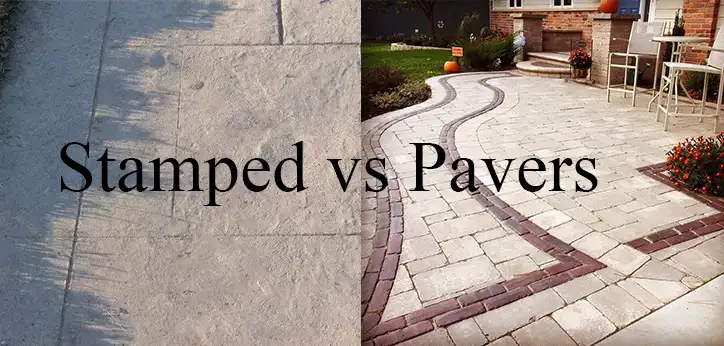
Pavers vs Stamped Concrete
This is a common head-to-head since stamped concrete is designed to mimic pavers. Stamped concrete provides the *look* of stone or brick at a lower cost than real pavers. The pattern is stamped into the surface while the concrete is still plastic.
The trade-off is in the authenticity and performance. Stamped concrete is still a monolithic slab with all the cracking risks of standard concrete. The pattern can wear over time in high-traffic areas, and the color may fade. For the true texture, flexibility, and repairability of individual units, real pavers are still the superior product.
Final Verdict: Which is Best?
So, concrete or pavers? The winner depends entirely on your specific priorities, property, and budget. There’s no universal “best,” but there is a best choice *for you*.
For most Calgary homeowners prioritizing the lowest upfront cost and a clean, modern look, a well-installed concrete patio—potentially with decorative stamping or staining—is an excellent investment. It delivers durability and function for a fair price.
If your priority is design versatility, easy long-term repairs, and maximum performance on Calgary’s tricky clay soils, the higher initial investment in a quality paver patio is worth every penny. It’s the more resilient and customizable system.
Need help weighing these factors for your home in Coventry Hills or your commercial project in Quarry Park? The team at EdmontonConcrete has the local expertise to guide you. We can provide detailed quotes for both options so you can compare real numbers for your specific vision. Let’s build a patio that stands up to Calgary and elevates your outdoor living.
