
If you’ve lived in Edmonton for any amount of time, you already know our winters are no joke. One week it’s -30°C, the next week a Chinook rolls in and everything starts melting—only to refreeze again overnight. While this cycle is tough on vehicles, roads, and roofs, it’s especially brutal on concrete.
Every year, homeowners and builders across Edmonton deal with cracked driveways, scaling patios, and spalling sidewalks—not because concrete is a poor material, but because the wrong concrete mix was used for our freeze-thaw climate. The truth is, not all concrete is created equal, and choosing the right mix design is the single most important factor in how long your concrete will last.
In this guide, we’ll break down exactly what makes a concrete mix perform in Edmonton’s climate, explain why many concrete surfaces fail prematurely, and show you what professionals look for when specifying durable, freeze-thaw–resistant concrete for driveways, flatwork, and structural applications.

Why Edmonton’s Climate Is Hard on Concrete
How Freeze-Thaw Cycles Damage Concrete
Concrete may look solid, but at a microscopic level, it contains tiny pores and capillaries. When water enters these pores and freezes, it expands by roughly 9%. That expansion creates internal pressure inside the concrete. When the ice melts, the pressure is released—only for the process to repeat again during the next freeze.
Over time, these repeated freeze-thaw cycles cause:
- Micro-cracking inside the concrete matrix
- Surface scaling and flaking
- Spalling along edges and corners
- Reduced structural integrity
According to the Portland Cement Association, concrete exposed to frequent freezing and thawing while saturated is among the most aggressive durability environments for cement-based materials. Edmonton fits that description perfectly.
Edmonton’s Extreme Temperature Swings
Edmonton doesn’t just experience cold—it experiences rapid temperature change. A slab can freeze solid overnight, partially thaw during the day, then refreeze again after sunset. Chinook events can accelerate this process, forcing concrete to expand and contract faster than it was designed to handle.
This is why concrete that performs well in milder climates often fails prematurely here. Mix designs that ignore freeze-thaw exposure simply cannot keep up with Alberta’s weather patterns.
What Makes a Concrete Mix Freeze-Thaw Resistant?
Air-Entrained Concrete: The Non-Negotiable Requirement
If there is one feature that defines freeze-thaw–resistant concrete, it’s air entrainment. Air-entrained concrete contains billions of microscopic, intentionally introduced air bubbles distributed throughout the mix.
These tiny air pockets act as pressure relief zones. When water freezes and expands, it has somewhere to go—dramatically reducing internal stress and cracking.
In Alberta, air-entrained concrete is not optional for exterior flatwork. Industry standards typically recommend:
- 5–8% air content for exterior slabs
- Slightly higher air content for thinner sections
- Tighter quality control for winter placements
Concrete without proper air entrainment may look fine after the first winter—but by year three or four, surface deterioration often becomes unavoidable.
Concrete Strength (PSI / MPa): More Isn’t Always Better
Many people assume that higher-strength concrete automatically performs better in freeze-thaw conditions. While strength matters, it’s only part of the equation.
For most Edmonton applications, professional mix designs fall within:
- 25 MPa (≈3,600 PSI) for sidewalks and patios
- 30 MPa (≈4,300 PSI) for driveways and heavy-use flatwork
- 32–35 MPa for structural or high-load applications
Higher strength often means lower water content, which can improve durability—but if air entrainment and proper curing are ignored, even high-PSI concrete will fail. Freeze-thaw resistance is about durability design, not just compressive strength.
The Importance of a Low Water-to-Cement Ratio
Water makes concrete workable, but too much water creates problems long after the pour is finished. Excess water increases porosity, allowing more moisture to enter the concrete—and more moisture means more freeze-thaw damage.
Experienced concrete producers aim for a low water-to-cement (w/c) ratio, typically in the range of:
- 0.40–0.45 for exterior freeze-thaw exposure
- Adjusted using water-reducing admixtures, not extra water
One of the most common causes of premature concrete failure in Edmonton is on-site water addition. Even a small increase in water content can significantly reduce long-term durability.
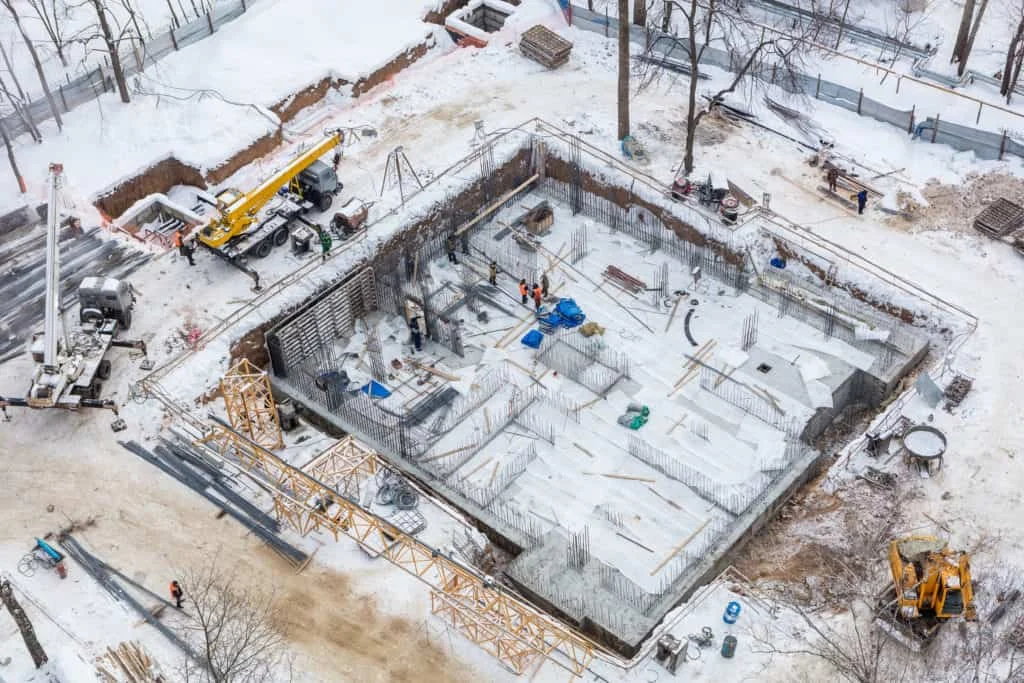
Understanding how Edmonton weather affects concrete is key to preventing early cracking and surface damage.
The Best Concrete Mix Design for Edmonton (Expert Recommendation)
Ideal Mix Specifications for Edmonton’s Climate
While exact mix designs vary based on application, exposure class, and placement conditions, professional-grade concrete for Edmonton generally shares several key characteristics:
- Air-entrained mix with controlled air content
- Minimum 30 MPa compressive strength for exterior flatwork
- Low water-to-cement ratio for reduced permeability
- Consistent batching and moisture correction
Equally important is maintaining a workable but controlled slump. Excessively high slump often signals too much water, which undermines freeze-thaw durability even if the mix meets strength requirements.
Why Aggregate Quality Matters in Freeze-Thaw Conditions
Aggregates make up roughly 60–75% of concrete’s volume, and their quality directly impacts performance. In freeze-thaw environments, aggregates must be:
- Durable and frost-resistant
- Low in absorption
- Properly graded to reduce voids
Weak or highly absorptive aggregates can fracture internally when they absorb water and freeze, contributing to cracking and surface breakdown. This is why sourcing aggregates suitable for Alberta’s climate is critical—and why local experience matters.
Supplementary Cementitious Materials (SCMs) in Cold Climates
Materials like fly ash, slag cement, and silica fume are often used to improve workability and long-term durability. However, in Edmonton’s climate, SCMs must be used carefully.
For example:
- Fly ash can improve permeability resistance but may slow early strength gain in cold weather
- Slag cement can enhance durability when properly proportioned
- Silica fume increases density but requires precise curing control
Experienced concrete suppliers adjust SCM percentages seasonally to ensure both early-age protection and long-term freeze-thaw resistance.
In the next section, we’ll dive deeper into concrete additives, application-specific mix recommendations, and the most common causes of concrete failure in Edmonton—and how the right mix prevents them.
Concrete Additives That Improve Freeze-Thaw Performance
Air-Entraining Admixtures
Air-entraining admixtures are the backbone of freeze-thaw–resistant concrete in Edmonton. These admixtures introduce a controlled system of microscopic air bubbles that remain stable throughout mixing, placement, and curing.
For exterior concrete in freeze-thaw environments, industry standards such as CSA A23.1 require consistent air content to ensure long-term durability. Even small variations can significantly affect performance, which is why professional batching and quality control are critical.
Well-controlled air entrainment helps:
- Reduce internal pressure during freezing
- Minimize surface scaling
- Extend service life by decades
Water Reducers and Plasticizers
Water reducers and plasticizers improve workability without increasing water content. This allows contractors to place and finish concrete efficiently while maintaining a low water-to-cement ratio.
In freeze-thaw conditions, this matters because:
- Lower water content reduces permeability
- Denser concrete absorbs less moisture
- Cracking risk is reduced over time
Accelerators for Cold Weather Concrete
When concrete is placed in cooler temperatures, accelerators can be used to promote early strength gain. This helps concrete resist early-age freezing before it has developed sufficient strength.
However, accelerators must be used carefully. Overuse or improper selection can lead to shrinkage cracking or long-term durability issues. Experienced concrete producers adjust admixture use based on temperature, placement timing, and curing strategy.
Application-Specific Concrete Mix Recommendations
Concrete Driveways in Edmonton
Driveways face some of the harshest conditions of any residential concrete surface. They experience:
- Freeze-thaw cycles
- Vehicle loads
- De-icing salts and chemical exposure
For Edmonton driveways, a typical professional recommendation includes:
- Air-entrained concrete
- Minimum 30 MPa strength
- Low water-to-cement ratio
- Proper finishing to avoid sealing air at the surface
Sidewalks, Walkways, and Patios
While sidewalks and patios carry lighter loads, they are fully exposed to moisture and freezing temperatures. Scaling is the most common failure mode when the wrong mix is used.
A well-designed mix combined with correct finishing and curing helps ensure these surfaces remain safe, attractive, and crack-resistant for years.
Garage Slabs and Structural Flatwork
Garage slabs often experience freeze-thaw exposure near door openings while remaining warmer inside. This thermal gradient makes durability even more important.
Key considerations include:
- Air entrainment where exposure exists
- Vapor barriers under slabs
- Controlled curing to limit shrinkage
Cribbing and Retaining Applications
Concrete cribbing and retaining elements must resist both moisture exposure and soil pressure. Drainage design plays a major role, but mix durability remains essential.
Proper exposure class selection and consistent mix quality help prevent long-term deterioration below grade.
Cold-weather pours demand different mix designs, protection methods, and curing strategies than summer placements. Knowing the best season to pour concrete in Edmonton can prevent early-age freeze damage and long-term durability issues.
Common Concrete Failures in Edmonton (And How the Right Mix Prevents Them)
Surface Scaling and Spalling
Surface scaling is one of the most visible signs of freeze-thaw damage. It often occurs when concrete lacks sufficient air entrainment or is exposed to de-icing salts before it has fully cured.
Using the correct mix design and allowing adequate curing time significantly reduces this risk.
Random and Map Cracking
Cracking is often blamed on temperature alone, but excessive water content and poor curing are usually the real culprits. A durable mix paired with proper jointing and curing minimizes uncontrolled cracking.
Early-Age Freeze Damage
If fresh concrete freezes before reaching adequate strength, permanent internal damage can occur. This is why cold-weather planning—timing, protection, and mix adjustment—is just as important as the mix itself.
CSA Standards for Freeze-Thaw Concrete in Alberta
Understanding CSA A23.1 Exposure Classes
CSA A23.1 defines exposure classes that guide concrete mix requirements. For Edmonton, exterior flatwork typically falls under freeze-thaw exposure categories that require:
- Air-entrained concrete
- Minimum strength thresholds
- Strict durability limits
Meeting these standards isn’t just best practice—it protects homeowners, builders, and contractors from premature failure and costly repairs.
Why Code-Compliant Mix Design Matters
Concrete that does not meet applicable standards can create liability issues, void warranties, and lead to expensive remediation. Professional concrete services follow CSA requirements as a baseline, not an afterthought.

Why Professional Concrete Supply Matters More Than the Mix Alone
Quality Control and Consistency
Even the best mix design can fail if batching and placement are inconsistent. Professional concrete suppliers monitor:
- Aggregate moisture content
- Accurate admixture dosing
- Batch-to-batch consistency
Placement, Finishing, and Curing
Freeze-thaw durability depends heavily on how concrete is handled after it leaves the mixer. Proper finishing avoids trapping excess water at the surface, while curing protects the slab during its most vulnerable early days.
This is where experience truly makes the difference.
Why Edmonton Concrete Services Gets It Right
Built for Edmonton’s Climate
Local experience matters. Concrete designed for Edmonton must account for temperature extremes, seasonal moisture, and real-world site conditions—not textbook assumptions.
Professional Team and Modern Equipment
With trained crews and modern production methods, Edmonton Concrete Services delivers consistent, durable concrete for flatwork, driveways, and cribbing applications across the city.
Focused on Long-Term Performance
The goal isn’t just to pour concrete—it’s to deliver surfaces that last for decades with minimal maintenance, even under relentless freeze-thaw exposure.
Frequently Asked Questions
What PSI concrete is best for Edmonton?
For most exterior applications, 30 MPa concrete with proper air entrainment offers an excellent balance of strength and durability.
Is air-entrained concrete required in Alberta?
For exterior concrete exposed to freeze-thaw cycles, air entrainment is considered essential under CSA standards.
Can concrete be poured in winter in Edmonton?
Yes, but it requires proper planning, temperature control, and cold-weather mix adjustments to prevent early-age freeze damage.
Does sealing concrete help with freeze-thaw damage?
Sealers can reduce moisture penetration and salt damage, but they cannot compensate for a poor mix design.

Final Thoughts: Choosing the Right Concrete Mix for Edmonton’s Climate
Concrete failures in Edmonton are rarely caused by the weather alone. They are almost always the result of improper mix design, poor placement, or inadequate curing.
By choosing a freeze-thaw–resistant concrete mix, following CSA standards, and working with experienced professionals, you can dramatically extend the life of your concrete surfaces—and avoid costly repairs down the road.
Get Expert Concrete Solutions in Edmonton
If you’re planning a concrete driveway, flatwork project, or cribbing installation in Edmonton, working with a knowledgeable local concrete service makes all the difference.
Contact Edmonton Concrete Services today to discuss your project and get concrete designed specifically for Edmonton’s freeze-thaw climate—built to perform, season after season.
