
Picture this: you’ve invested thousands of dollars into a hot tub or a beautiful outdoor BBQ kitchen, only to realize later that the foundation underneath wasn’t built to handle Alberta’s climate or the weight of what sits on top. Cracked slabs, uneven surfaces, water pooling, and premature wear are all common problems we see across Edmonton backyards—and almost all of them start with one issue: improper concrete work.
At Edmonton Concrete Services, we design and install hot tub pads and BBQ kitchen slabs that are engineered for long-term performance in Edmonton’s demanding freeze–thaw environment. With professional crews, modern equipment, and real-world experience in residential concrete flatwork, we help homeowners protect their investments and enjoy outdoor living with confidence.
Why Concrete Hot Tub Pads and BBQ Kitchen Slabs in Edmonton Require Proper Engineering
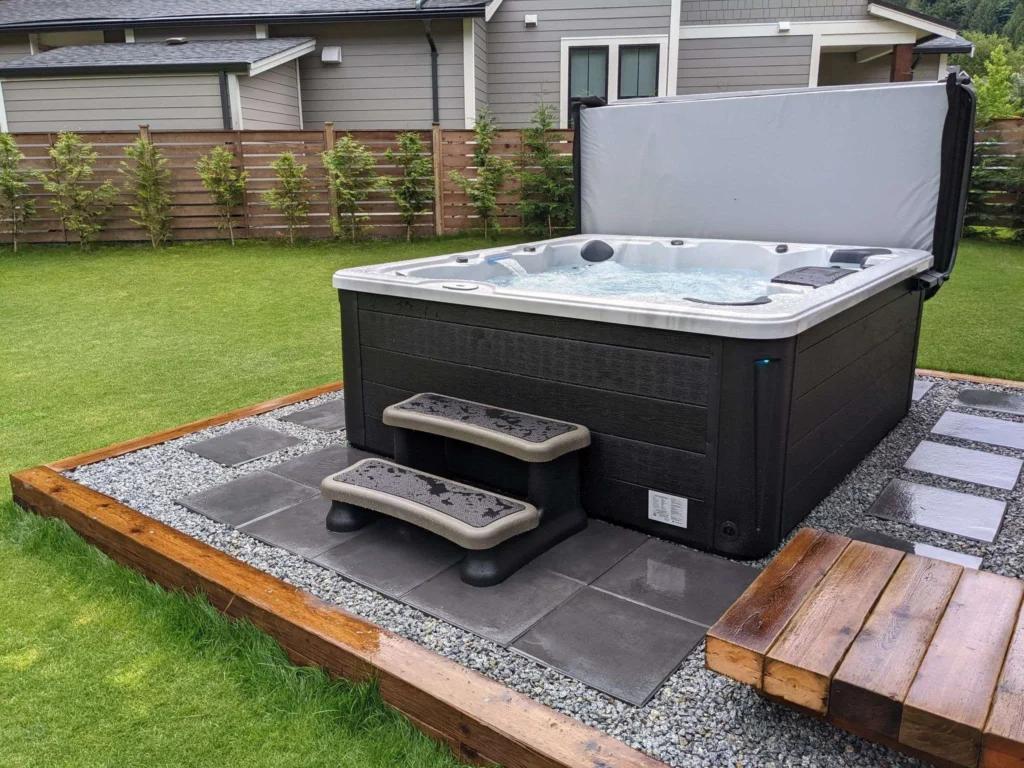
Concrete is not just about appearance—it’s about structural integrity, safety, and longevity. When it comes to hot tub pads and BBQ kitchen slabs, a properly engineered concrete base is the difference between a feature that lasts decades and one that fails within a few seasons.
Structural Load & Safety Requirements
A filled hot tub can weigh anywhere from 4,000 to over 7,000 pounds, depending on its size, water volume, and number of occupants. Outdoor kitchens add similar challenges, with heavy grills, stone countertops, masonry features, and appliances concentrating load in specific areas.
Without the correct slab thickness, reinforcement, and base preparation, this weight can cause:
- Uneven settling
- Surface cracking
- Structural stress on equipment
- Premature failure of finishes
According to the American Concrete Institute (ACI), residential slabs supporting heavy static loads should be reinforced and designed with proper sub-base compaction to prevent differential settlement—guidelines we follow closely on every project.
Alberta Climate & Freeze–Thaw Protection
Edmonton’s climate presents unique challenges. Seasonal freeze–thaw cycles cause soil expansion and contraction, which can lift or crack poorly built concrete. A professionally installed hot tub pad or BBQ slab must account for:
- Proper excavation depth
- Well-compacted granular base
- Controlled drainage away from the slab
- Expansion joints to absorb movement
“Most concrete failures in cold climates are not caused by the concrete itself, but by inadequate base preparation and water management,” notes a technical bulletin from the National Ready Mixed Concrete Association (NRMCA). This is why our approach always starts below the surface.
Concrete Hot Tub Pads in Edmonton: Thickness, Reinforcement & Drainage
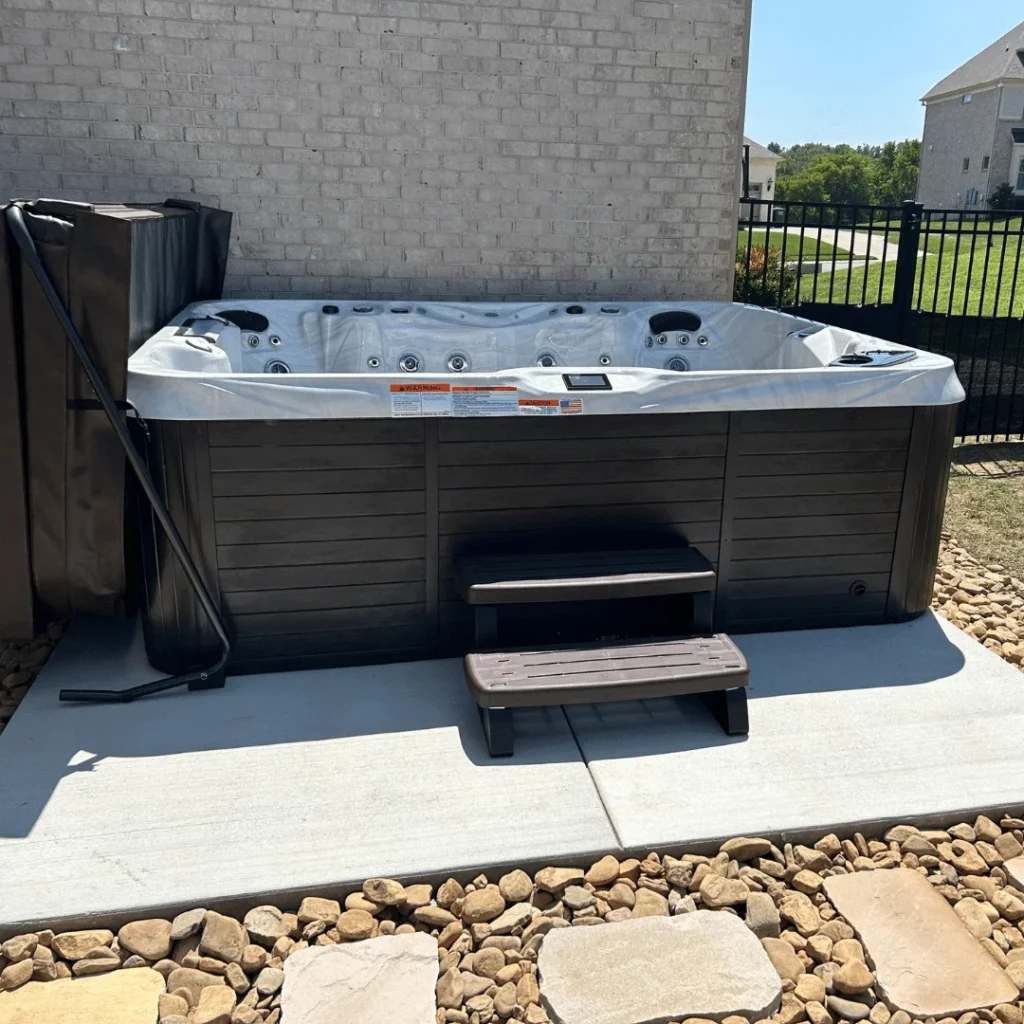
A concrete hot tub pad may look simple, but there is significant engineering behind a slab that stays level, crack-resistant, and safe year after year. In Edmonton, shortcuts almost always lead to costly repairs.
Ideal Thickness & Reinforcement
For most residential applications, a 4” to 6” thick concrete slab is standard for hot tub pads. However, thickness alone is not enough. Reinforcement plays a critical role in distributing load evenly and controlling cracking.
Common reinforcement options include:
- Steel rebar grids for larger or heavier tubs
- Welded wire mesh for standard residential pads
- Fiber-reinforced concrete for added crack resistance
Our team evaluates the hot tub model, weight specifications, and site conditions before recommending the appropriate reinforcement system—ensuring your slab is built specifically for your setup.
Drainage & Moisture Management
Water management is one of the most overlooked aspects of hot tub pad construction. Standing water beneath or around a hot tub can accelerate soil erosion, contribute to frost heave, and even damage nearby landscaping.
Professional drainage solutions include:
- Slight slab grading to direct water away
- Compacted gravel base layers
- Strategic placement relative to yard slope
In real-world Edmonton installations, we often correct issues caused by pads poured directly on soil with no drainage plan—an approach that almost always leads to uneven settling within a few winters.
Concrete vs. Gravel vs. Pavers
Homeowners often ask whether concrete is really necessary. While gravel and pavers can work in certain situations, they come with trade-offs.
| Base Type | Pros | Cons |
|---|---|---|
| Concrete Slab | Longest lifespan, best load distribution, low maintenance | Higher upfront cost |
| Gravel Pad | Lower cost, quick install | Can shift, requires maintenance, less stable |
| Pavers | Decorative appearance | Higher risk of uneven settling under heavy loads |
For permanent installations in Edmonton’s climate, a professionally built concrete hot tub pad remains the most reliable long-term solution.
BBQ Kitchen Slabs in Edmonton: Load Requirements & Heat Resistance
Outdoor kitchens are becoming a staple of modern Edmonton homes, but unlike patios, BBQ kitchens place concentrated loads and heat stress on the slab below. A standard patio pour is rarely sufficient.
Load Requirements for Outdoor Kitchens
BBQ kitchen slabs must support:
- Built-in grills and smokers
- Stone or concrete countertops
- Refrigeration units and storage
- Masonry walls or pizza ovens
These features often create point loads that demand thicker concrete sections and strategic reinforcement. Without this planning, cracking and surface damage can occur within the first year of use.
Custom Sizing & Layout Planning
Every backyard is different. That’s why we design BBQ kitchen slabs based on actual usage, layout, and future expansion plans—not just square footage.
Custom planning considerations include:
- Clearances for cooking and seating areas
- Integration with walkways and patios
- Proper access for utilities
By treating the slab as part of a complete outdoor living system, we help homeowners avoid costly modifications later while maximizing both function and resale value.
Heat Resistance & Surface Performance
Unlike standard patio slabs, BBQ kitchen slabs must perform under constant heat exposure. Grills, smokers, and fire features generate high temperatures that can stress inferior concrete mixes or poorly cured slabs. Professional concrete installation ensures the correct mix design, curing process, and finishing techniques to handle repeated heating and cooling cycles without surface damage.
Well-built concrete slabs offer:
- High heat tolerance without warping
- Resistance to grease stains when sealed properly
- Stable surfaces for heavy appliances
According to the Portland Cement Association, properly cured concrete can withstand temperatures well beyond what residential outdoor cooking appliances produce—making it one of the safest and most durable base materials available.
Custom Concrete Finishes for Outdoor Spaces
Function matters, but aesthetics complete the experience. Concrete slabs for hot tubs and BBQ kitchens can be finished in multiple ways to complement your home’s architecture and landscaping.
Broom Finish vs. Smooth Finish
A broom finish is the most common choice for hot tub pads and outdoor kitchens in Edmonton. It provides slip resistance, excellent drainage performance, and a clean, timeless appearance.
A smooth trowel finish offers a sleek, modern look but requires careful sealing and is best suited for covered or low-moisture areas.
Decorative & Stamped Concrete Options
For homeowners looking to elevate their outdoor space, decorative concrete delivers both durability and design flexibility. Popular options include:
- Stamped concrete patterns that mimic stone or tile
- Integral color to match landscaping elements
- Exposed aggregate for added texture and grip
Decorative finishes allow BBQ kitchen slabs to blend seamlessly with patios, walkways, and pool decks while maintaining the structural performance concrete is known for.
Step-by-Step Process: How Professional Concrete Pads Are Built
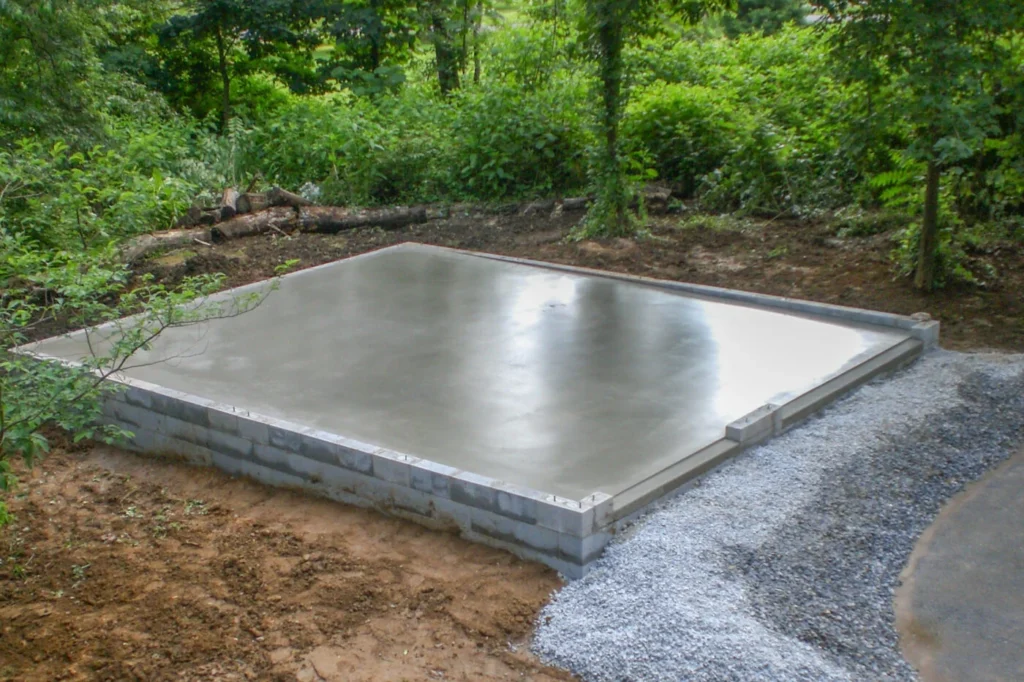
Understanding how your slab is built helps explain why professional installation matters. Every hot tub pad and BBQ kitchen slab we install follows a proven, methodical process.
Site Preparation & Excavation
We begin by excavating to the correct depth based on load requirements and soil conditions. In Edmonton, this step is critical to prevent frost-related movement.
Base Compaction & Cribbing
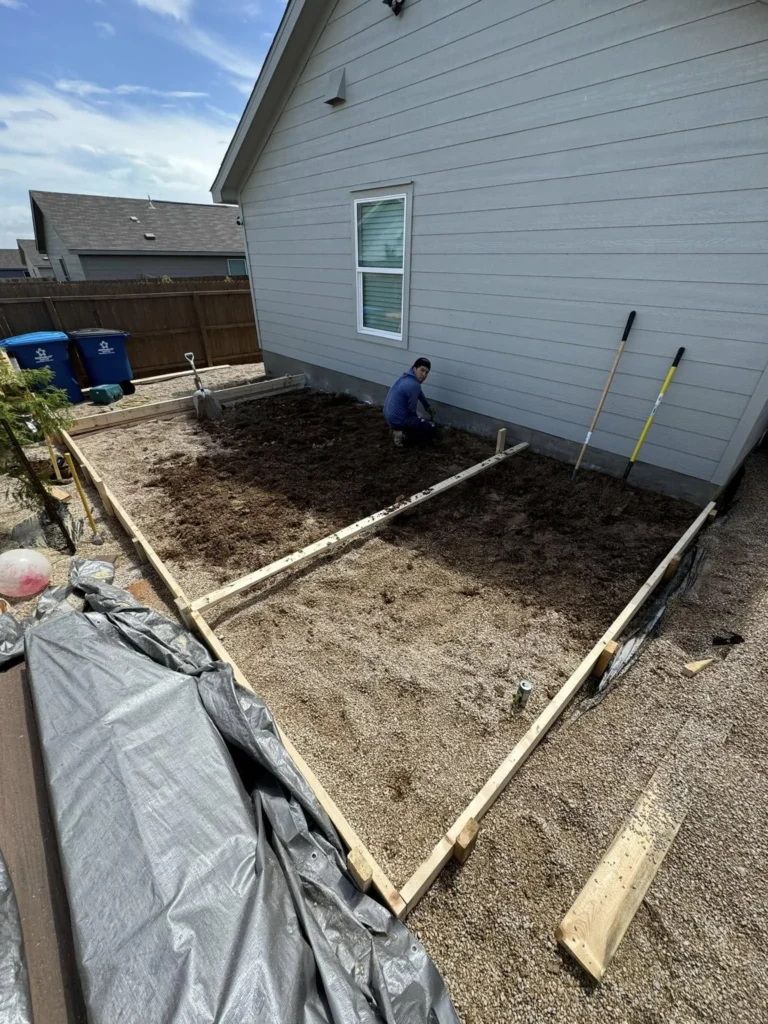
A compacted granular base provides the foundation for long-term stability. In areas requiring elevation control or grade correction, cribbing techniques are used to create a level, secure platform.
Formwork & Elevation Control
Precision formwork ensures the slab thickness, slope, and dimensions are exact—essential for drainage and equipment alignment.
Concrete Pour & Finishing
Concrete is poured evenly, consolidated properly, and finished according to the selected surface type. This stage determines both appearance and performance.
Curing & Final Inspection
Proper curing strengthens the slab and minimizes cracking. Final inspections confirm surface quality, drainage, and readiness for equipment placement.
Common Mistakes Homeowners Make (And How We Prevent Them)
Over the years, we’ve repaired countless slabs that failed due to shortcuts or inexperience. The most common mistakes include:
- Pouring concrete directly on soil
- Insufficient slab thickness
- Poor drainage planning
- DIY installs without reinforcement
Our professional process eliminates these risks by following industry best practices and adapting them to Edmonton’s unique conditions.
Why Choose Edmonton Concrete Services
We’re not a general contractor—we’re concrete specialists. Our team focuses exclusively on high-quality concrete flatwork for Edmonton homeowners.
- Local experience with Edmonton soil and climate
- Modern equipment for precision and efficiency
- Skilled crews trained in residential concrete work
- Commitment to long-term durability, not shortcuts
Our goal is simple: deliver concrete solutions that perform as well in year twenty as they do on day one.
Cost Factors: What Affects Pricing?
Every project is unique, but several key factors influence pricing:
- Slab size and thickness
- Reinforcement requirements
- Site access and excavation needs
- Decorative finishes or custom designs
While concrete slabs may have a higher upfront cost than temporary solutions, their longevity and low maintenance make them the most cost-effective option over time.
Frequently Asked Questions
Can I place a hot tub directly on a patio slab?
Only if the slab was designed for the load. Many patio slabs are too thin or lack reinforcement for hot tubs.
How long should I wait before placing my hot tub or BBQ equipment?
Most slabs require at least 7 days before light loading and 28 days to reach full strength.
Do I need permits in Edmonton?
Most residential slabs do not require permits, but utility locations and zoning considerations should always be checked.
How long will a concrete slab last?
With proper installation and maintenance, concrete slabs can last 30–40 years or more.
Ready to Build Your Outdoor Space the Right Way?
A hot tub pad or BBQ kitchen slab is not just concrete—it’s the foundation of how you relax, entertain, and enjoy your home. Investing in professional concrete work protects that investment for decades.
Contact Edmonton Concrete Services today for a free estimate on custom hot tub pads, BBQ kitchen slabs, and residential concrete flatwork across the Edmonton area. Let’s build it once—and build it right.
